1951 was a ‘duck and cover’ kind of year. People were genuinely worried that a stray atom would turn their suburban ranch house into a glowing crater. George Pal, the stop-motion wizard behind the Puppetoons, saw this dread and realized there was money to be made from it.
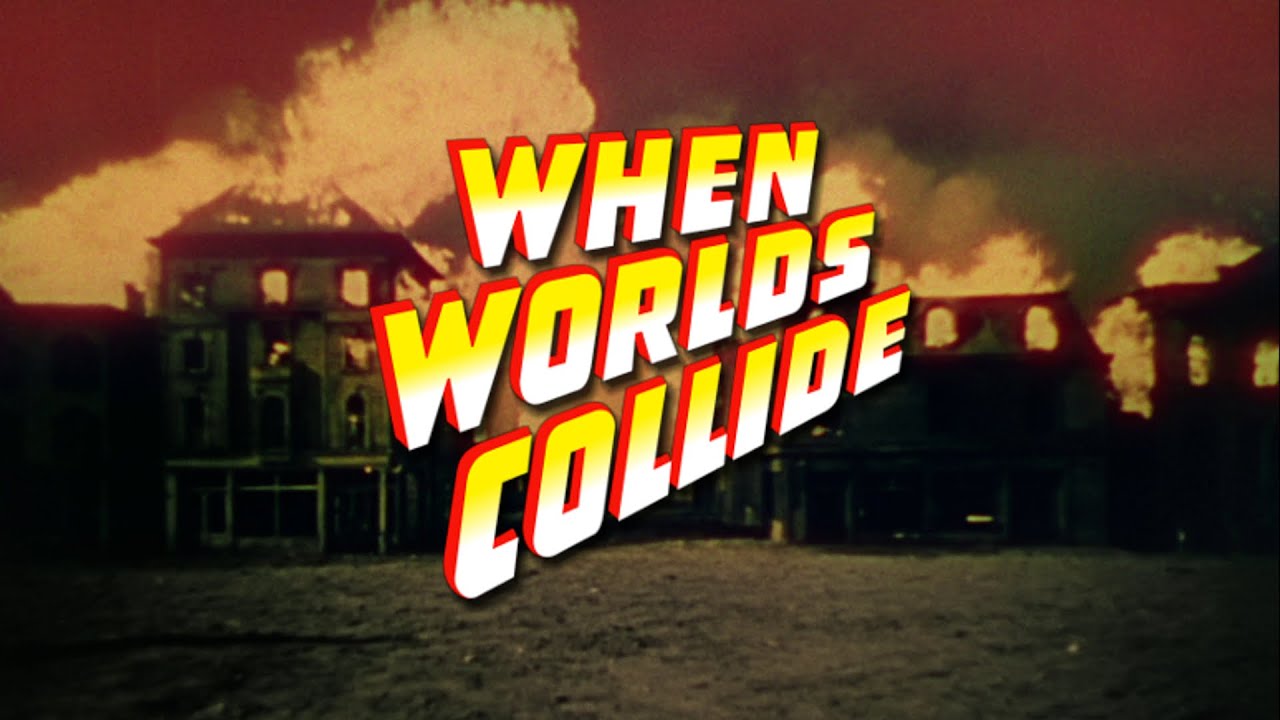
Enter When Worlds Collide.
Pal took the 1933 novel by Edwin Balmer and Philip Wylie and turned it into a spectacle that would haunt the dreams of every school-aged kid for a generation
A Bad Day for Astronomy
When Worlds Collide kicks off at an observatory, where an astronomer named Dr. Bronson discovers something that makes his morning coffee taste like ash. He finds that a rogue star named Bellus is hauling a planet named Zyra through space like a cosmic wrecking ball, and the trajectory is pointed straight at the big blue marble we call home.
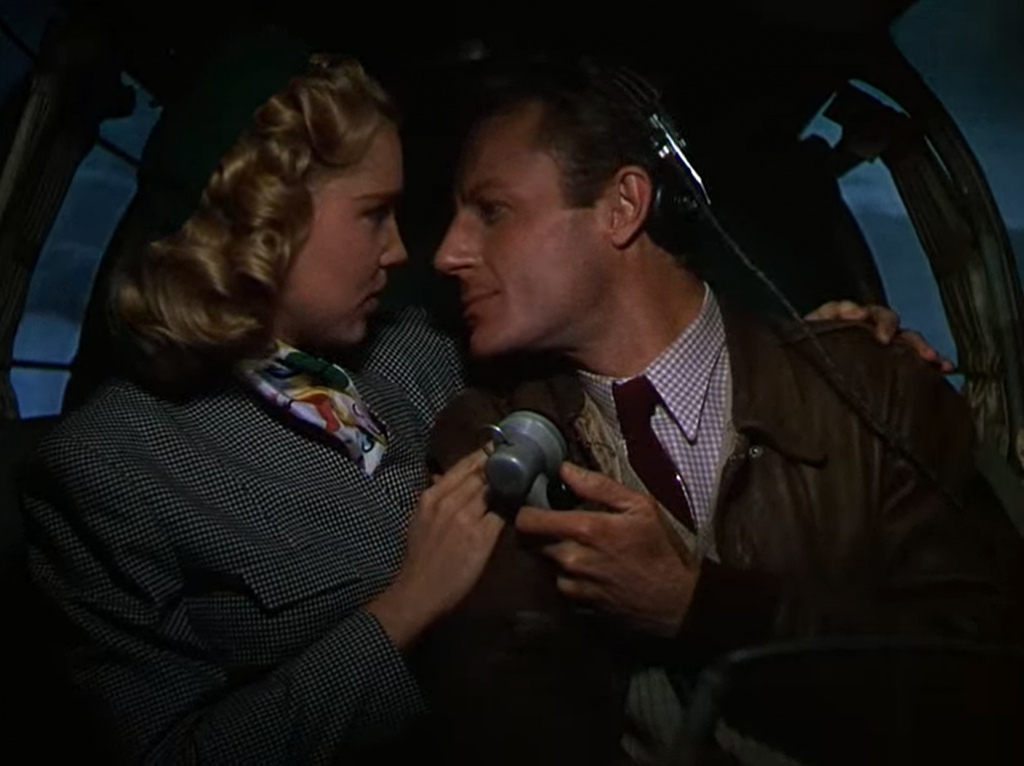
Now, usually, in these movies, the scientists are the heroes. But in When Worlds Collide, the scientists are just the guys delivering the obituary. Dr. Bronson sends the data to the United States via a pilot named David Randall (Richard Derr). Randall is the quintessence of the 1950s Leading Man: he has a jawline you could sharpen a pencil on and a personality that is roughly 70% starch and 30% can’t keep it in his trousers.
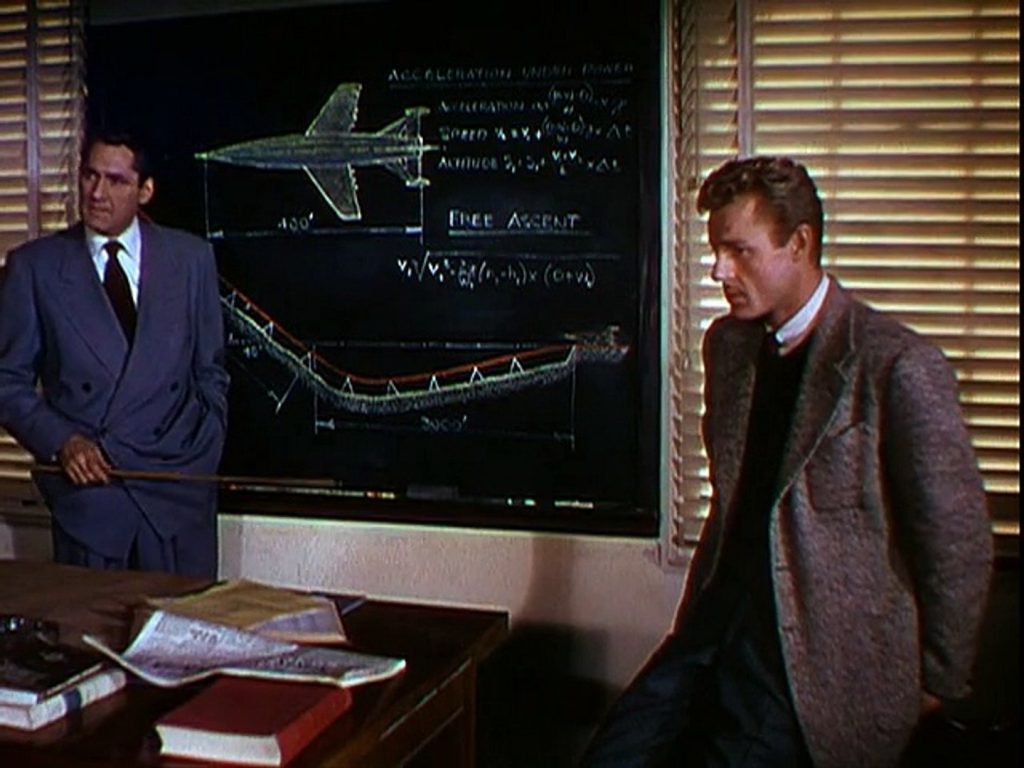
He delivers the data to Dr. Cole Hendron, who does the math on his chalkboard (because computers in 1951 were the size of a refrigerator and half as smart).
The results are not great.
Zyra will pass Earth first, causing global cataclysms that will make the Old Testament look like a rainy Tuesday. Bellus will collide with Earth nineteen days later, effectively hitting delete on the human experiment.
The United Nations: How to Bury Your Head in the Sand
One of the funniest and most cynical parts of this film is the meeting at the United Nations. Hendron and Bronson present their findings to the world leaders, expecting a global effort to save the species. Instead, the delegates basically laugh them out of the room. They call it alarmist. They say the math is wrong.
It’s a chillingly accurate depiction of how humanity usually reacts to slow-moving disasters. We don’t believe the house is on fire until our shoes start melting. So, Hendron realizes that if they’re going to save anyone, they have to go rogue. They have to build a private Space Ark using the only thing that actually moves the world: Spite and Money.
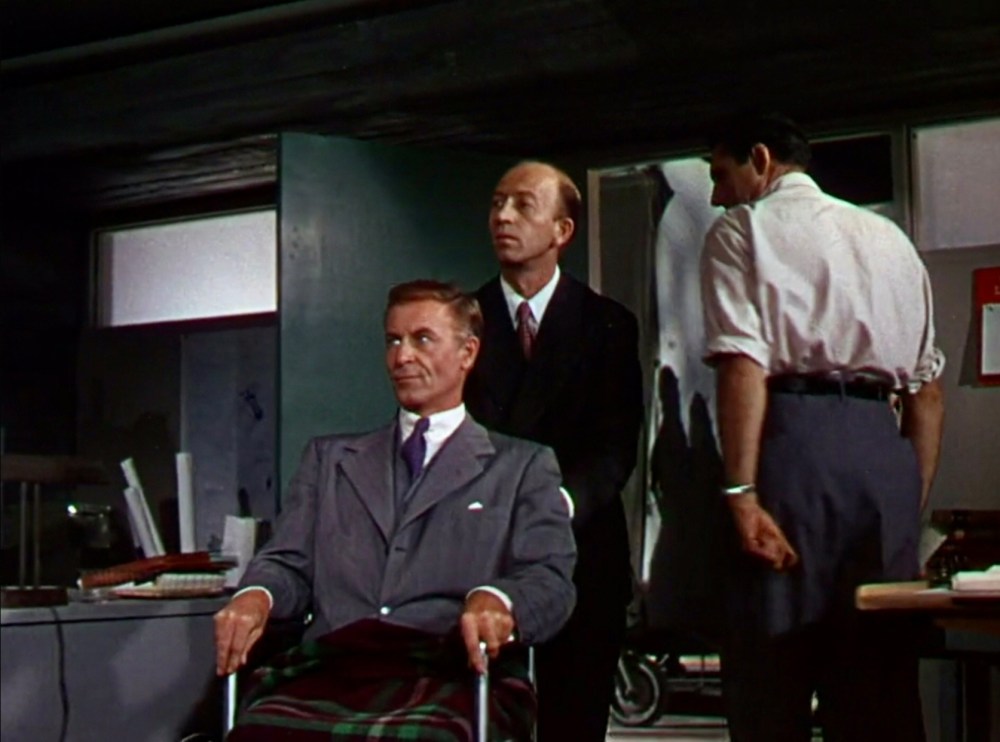
Sidney Stanton: The Billionaire We Love to Hate
This brings us to the real star of the show: Sidney Stanton (played with marvelous, sneering venom by John Hoyt). What a bellend. Stanton is a cynical, wheelchair-bound billionaire who lives in a penthouse that probably smells like mahogany and broken dreams. He agrees to fund the rocket, but he isn’t doing it out of the goodness of his heart. He’s doing it because he wants to live, and he wants to decide who gets to come along for the ride.
Stanton is the villain of the piece, but in hindsight, he’s the only one talking sense. He knows that once word gets out that the world is ending, the thin veneer of civilization is going to peel off like a cheap sticker. He brings a crate of rifles to the construction site. He keeps a watchful eye on every rivet. He is the personification of the ‘I’ve Got Mine’ mentality, and John Hoyt plays him with such a delicious lack of apology that you almost find yourself rooting for the old crank.
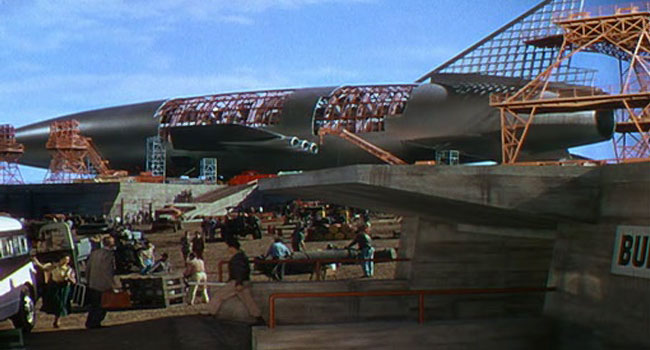
The Construction: Rivets and Romance
While the world is literally counting down its final days, the movie pivots into a Building the Ark montage. We see hundreds of workers, scientists, engineers, and laborers, working around the clock in a remote mountain valley.
In a modern movie, this would be a high-tech, sterile environment. In 1951, it looks like a very intense construction site for a municipal library. There are blueprints everywhere, men in fedoras pointing at things, and a lot of very loud hammering.
And, because it’s a 1950s movie, we need a love triangle. We have David Randall (the pilot), Joyce Hendron (the scientist’s daughter), and Dr. Tony Drake (the nice doctor Joyce was supposed to marry). This subplot is about as necessary as a screen door on a submarine, but it gives us plenty of scenes of people looking wistfully at the stars while dramatic violins swell. It’s a reminder that even when the sun is about to swallow the Earth, people still find time to be awkward about their feelings.
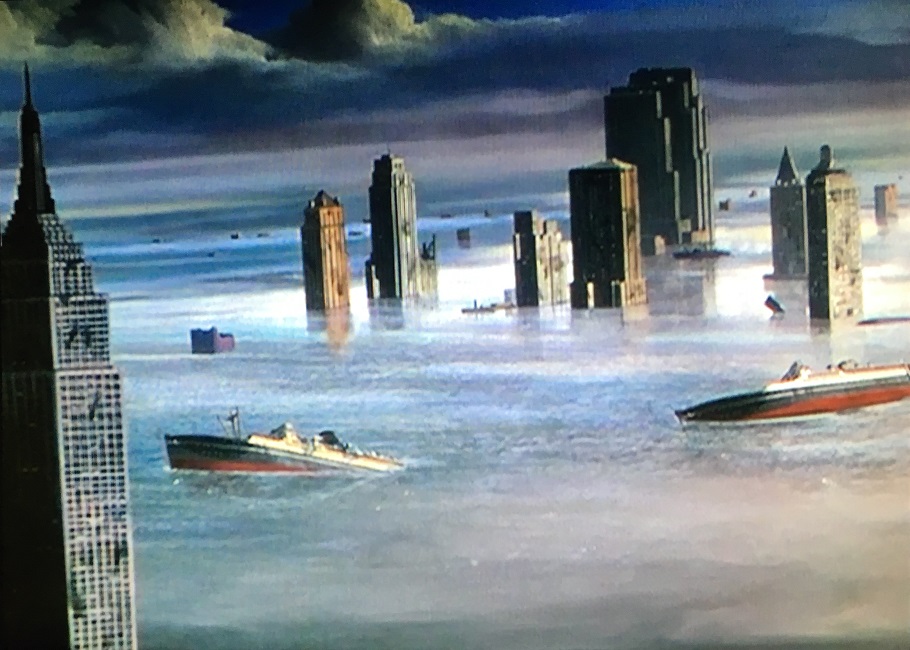
The Zyra Flyby: George Pal Unchained
Halfway through the film, Zyra passes Earth, and this is where George Pal gets to flex his Oscar-winning muscles. As the rogue planet swings by, its gravity starts yanking on our oceans like a bored toddler splashing aroundnin a very large bathtub.
The sequences of global destruction are, frankly, legendary. We see New York City getting hit by a tidal wave that looks like it was inspired by a nightmare. We see volcanoes erupting in the middle of cities. We see the ground splitting open.
What makes these scenes work is the miniature work. These aren’t digital pixels; these are hand-crafted models being smashed by actual water and fire. When that crane falls on a group of scientists and workers, it feels lime it could and should crush the life out of them. The Technicolor palette makes the fire look brighter, the water look deeper, and the blood look like bright red paint. It’s glorious, high-budget disaster porn.
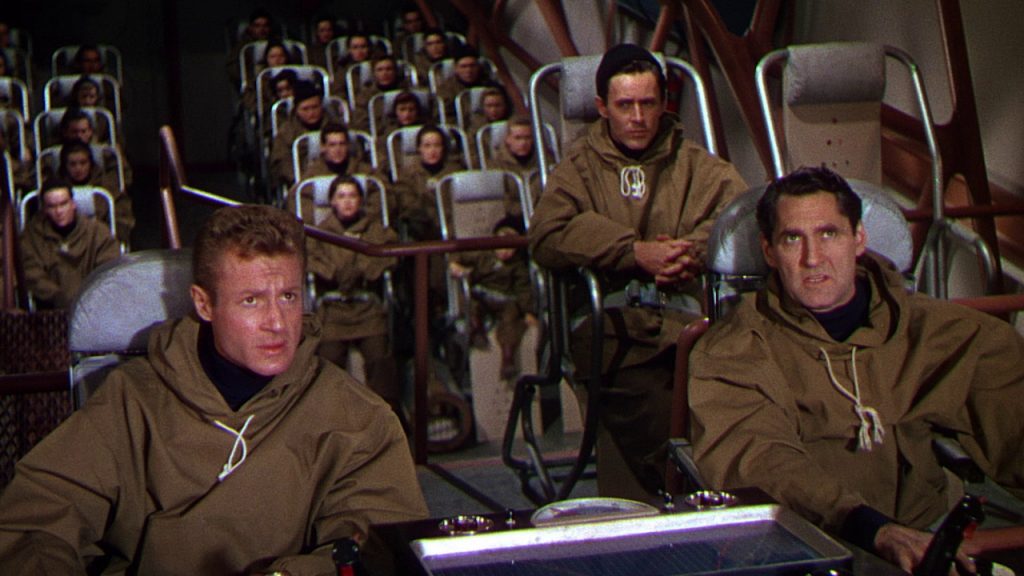
The Lottery: The Original Battle Royale
Once Zyra passes, the survivors at the camp realize they have nineteen days left before Bellus arrives for the final destruction of the Earth. The problem? The rocket can only carry forty people. And there are a lot more than forty people working on it.
So, the Lottery of Doom begins.
This is where the movie gets surprisingly dark. The workers are told that the seats will be chosen by random draw. If your name is picked, you’re a pioneer. If not? You’re fertilizer.
Watching the reaction of the workers as the names are posted on a board is a masterclass in mid-century existential dread. There’s no screaming or rioting (yet). People just accept their fate with a stoic, ‘Well, that’s the way the cookie crumbles’ attitude that feels utterly alien today.
But then, the cracks start to show. Stanton’s man-servant tried to get his ticket punched by pulling a gun, then ends up with more holes in him than Swiss cheese. One worker realizes his girlfriend didn’t make the cut and decides to stay behind with her (a move that the movie presents as noble, but let’s be honest, it’s a death pact). The tension builds as the massive silver rocket, which looks like a giant Art Deco cigar, is prepped for launch.
The Not-So-Noble Sacrifice
As the countdown reaches its final minutes, the people left behind finally snap. Sidney Stanton’s prediction comes true: the rifles come out. The losers of the lottery storm the launch pad, desperate for a seat on the bus to Zyra.
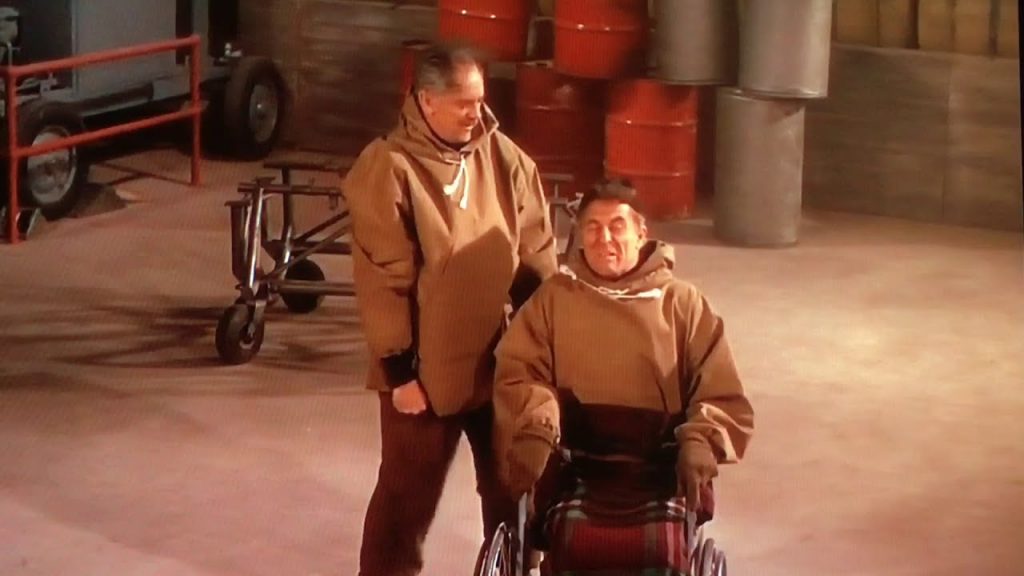
Inside the ship, the chosen forty are strapping in. Outside, Dr. Hendron (the real hero) decides to pull a fast one. He realizes the ship is over its weight limit. So, he closes the doors, sets off the ingnition, and leaves himself and Sidney Stanton, the man who paid for the whole damn thing, to wait for the cosmic punch to smack them right in the kisser.
Stanton is screaming, pleading for his life. He offers everything he has to get back on that ship. But Hendron just looks at him with a cold, sacrificial gaze and stays behind with him, holding the wheelchair back so the ship can blast off. It’s a brutal, cold-blooded moment of scientific necessity. Hendron basically murders his benefactor to ensure the ship can make the jump. It’s the kind of morally grey ending that makes you wonder who the real monster is, the planet about to brin extinction or the man in the lab coat.
The Slide into the Future
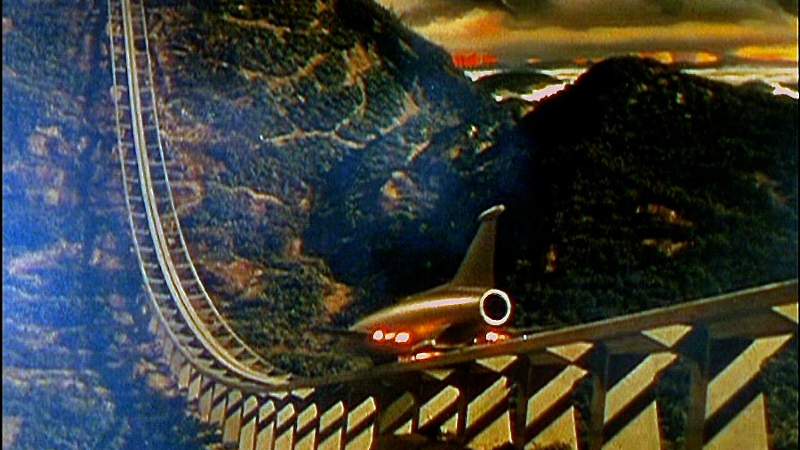
The launch itself is one of the most iconic images in sci-fi history. The rocket doesn’t have landing gear (a major oversight that nobody seems to mention until they’re already in space). It takes off by sliding down a massive, miles-long roller coaster track built on the side of a mountain.
The ship screams down the ramp, propelled by rockets that look like they’re shooting liquid sunlight. It hits the jump and hurtles into the void. The passengers are knocked out by the G-force, and for a few moments, we just drift through the stars.
The Matte Painting of Paradise
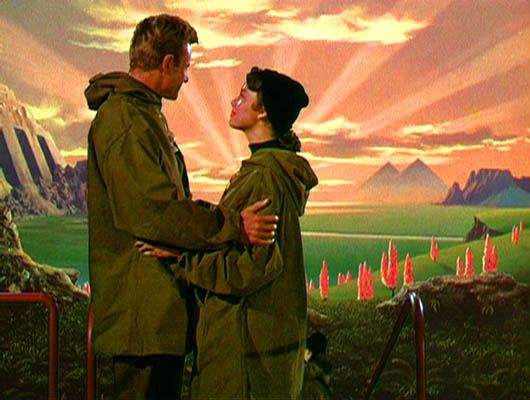
The survivors wake up as the ship approaches Zyra. They manage to land the rocket by sliding it across a snowy field (again, no landing gear. I cannot emphasize enough how much this would suck in real life).They open the hatch and look out. And here, we get the infamous final shot.
Seemingly, the production ran out of money at the very last second, because the Lush World of Zyra is represented by a rough, colorful matte painting that looks like it belongs on the cover of a Prog-Rock album.
The survivors walk out into the fresh air (without space suits, mind you, because why the fuck not) and the movie ends with a title card quoting the Bible. It’s a triumphant, technicolor ending that completely ignores the fact that 99.9% of the human race just became vapour.
Why I Love It
Because it is the blueprint for the modern disaster movie. Every time you see a movie where a group of ‘special people’ have to survive a catastrophe while the rest of the world burns, you’re watching the ghost of George Pal.
It’s a movie that balances B-Movie thrills with genuine A-List spectacle. It’s a time capsule of 1951 anxieties, showing a world that was terrified of its own destruction but still believed that a few smart guys in ties could save the day. It’s cynical, it’s beautiful, and it features a man being denied a seat on a rocket because he’s an asshole.
It features some of the best miniatures of the decade, a villain who is actually right, and a rocket ship that functions like a water slide.
If you haven’t seen it, you are missing the foundation of the apocalypse genre. Go find the Blu-ray. Turn up the color until your eyes hurt. And remember: if the rogue star comes for you, make sure you’re the one holding the lottery tickets.
Leave a Reply