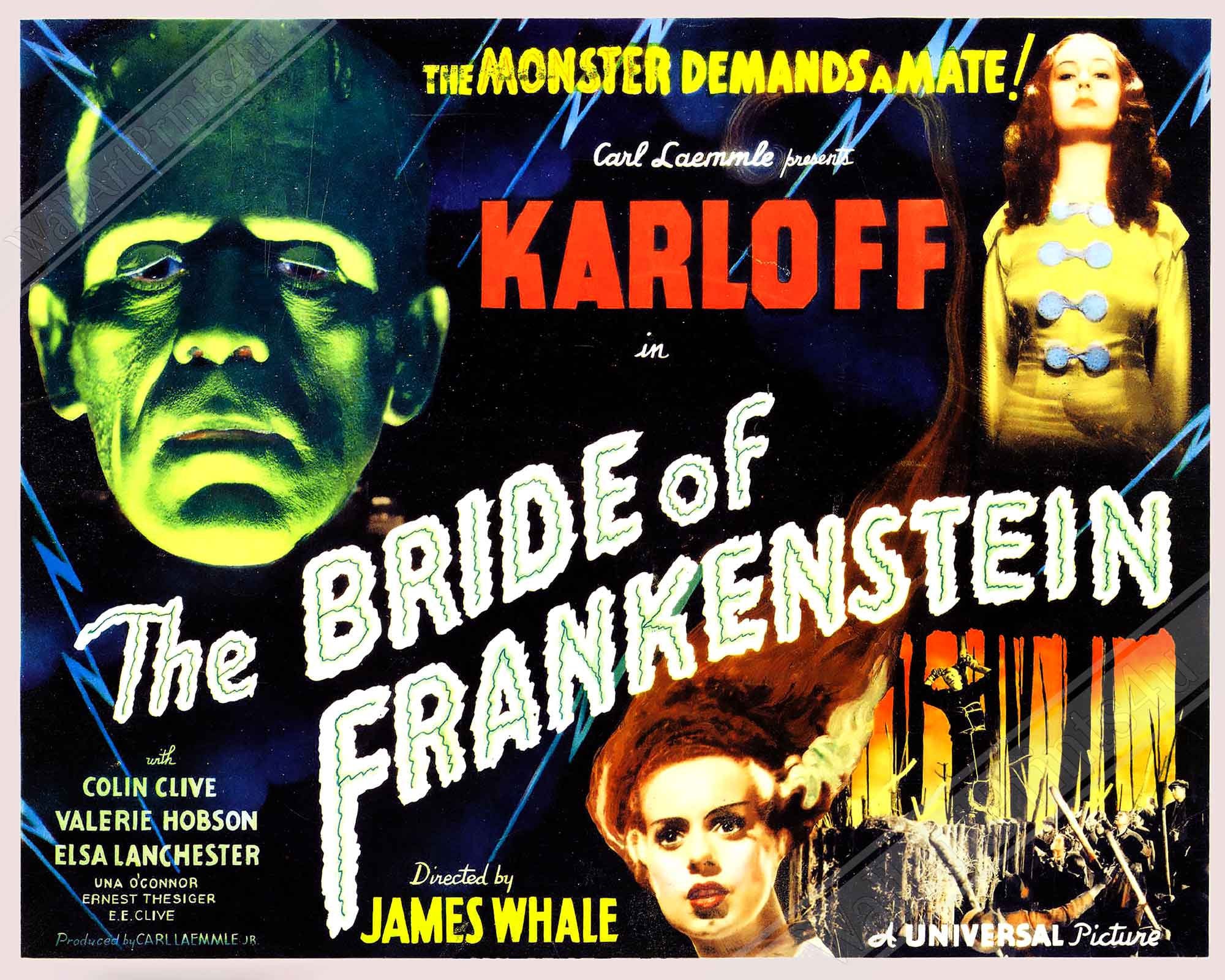
There are sequels, and then there is Bride of Frankenstein.
Most sequels are made because somebody somewhere has looked at a successful film, stared lovingly at a spreadsheet and thought, “We could probably squeeze another few quid out of this bastard.” And occasionally, because the cinematic gods are strange and unpredictable creatures, somebody takes that basic idea and turns it into something better than the original.
Bride of Frankenstein is one of those films.
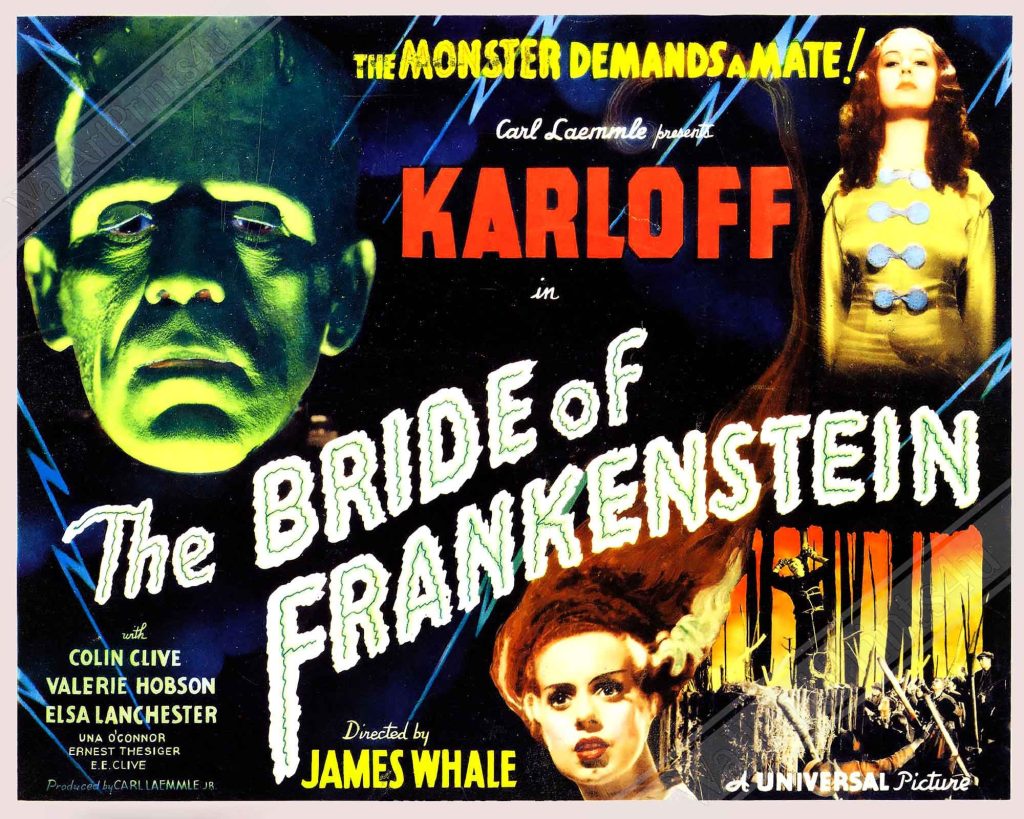
Released in 1935, four years after James Whale’s Frankenstein, it takes everything that worked about the first film, throws a considerable amount of theatrical madness into the mix and somehow emerges as something funnier, stranger, more beautiful and, at times, considerably more unsettling.
It is also one of those films that makes you wonder what the hell Hollywood was drinking in the 1930s. Whatever it was, thank Christ they were drinking it.
The story begins at Villa Diodati with Mary Shelley herself, played by Elsa Lanchester, sitting around with Lord Byron and Percy Shelley. Byron complains that her story ended too abruptly at the burning windmill, prompting Mary to reveal that the horror didn’t end there and that the original narrative wasn’t nearly fucked-up enough.
From there we return to Henry Frankenstein, played once again by Colin Clive, who has survived the climax of the previous film and apparently learned absolutely nothing. Henry is pulled back towards the work he swore he had abandoned by Dr Pretorius, played by Ernest Thesiger, a magnificent lunatic who appears to have wandered into the movie from an entirely different, considerably campier nightmare.
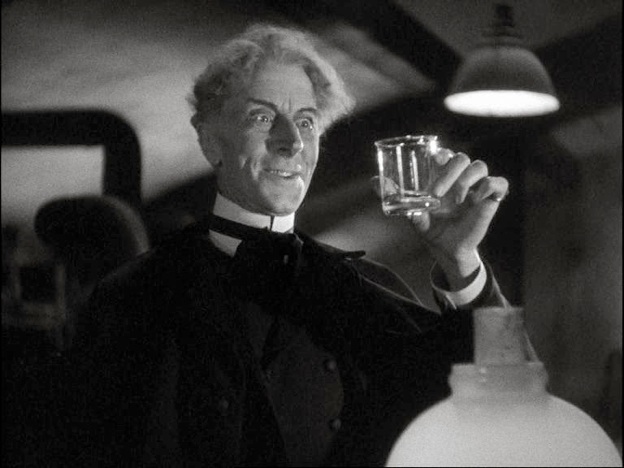
Pretorius wants Henry to help him create life. Henry, quite reasonably by Frankenstein standards, initially says no. Then he thinks about it.
Before long we’re back in the laboratory, surrounded by electricity, bubbling jars, enormous machinery and enough electrical equipment to make a modern health and safety inspector simply lie down in the road.
This time, however, there is a new objective. The Monster needs a mate. Because apparently the answer to creating a murderous reanimated corpse is not “perhaps don’t do that again”, but “have you considered getting him a girlfriend?”
It is a magnificent piece of escalation.
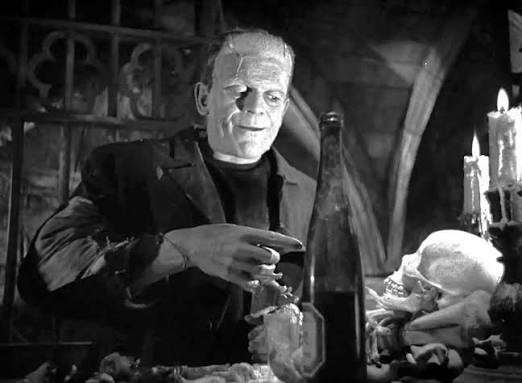
Boris Karloff returns as the Monster, and if anything, the character is even more sympathetic here than he was in the original. He is still capable of terrible violence, but Whale increasingly presents him as something much closer to a lonely, confused child trapped inside a body everyone else finds terrifying.
The relationship between the Monster and the blind hermit, played by O.P. Heggie, is particularly wonderful. The hermit cannot see the creature’s appearance, so he responds to him as a person rather than as a walking corpse with a bad temper. For perhaps the first time, the Monster gets something approaching friendship. Then, because this is a horror film and happiness is apparently illegal, the outside world inevitably comes crashing through the door.
Karloff plays the tragedy beautifully. The performance is physical, expressive and often heartbreaking without becoming mawkish. There is something wonderfully childlike about the Monster’s attempts to understand the world around him, which makes the moments when that innocence gives way to violence hit considerably harder.
But when the Bride of Frankenstein has Ernest Thesiger wandering around in it, so nobody is allowed to be miserable for too long.
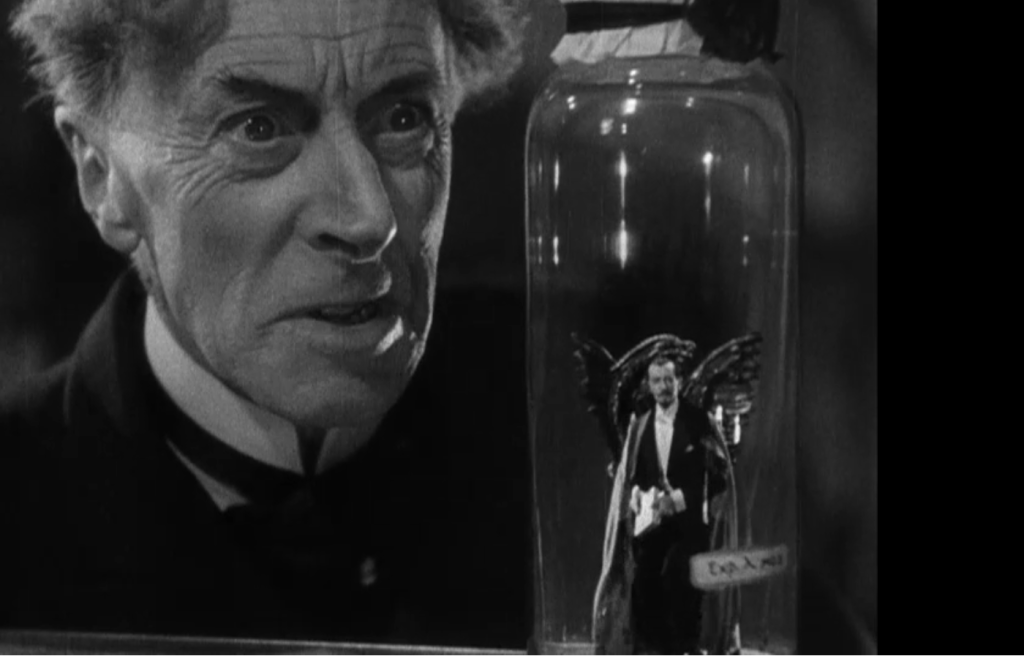
Dr Pretorius is one of the great horror movie weirdos. He’s not simply a mad scientist; he’s a bloody theatre production wearing a top hat. Thesiger plays him with this wonderful combination of menace, amusement and barely contained delight, as though he knows perfectly well that everything he’s doing is completely fucking insane and is having the time of his life anyway.
He introduces Henry to his creations: tiny living human beings kept inside glass jars, including a miniature king determined to get his leg over, a queen who is having none of that, and a tiny devil who has much more in common with the Mad Dr. than anyone would care to admit.
In a film already containing a reanimated corpse, a mad scientist, a laboratory full of machinery and a plan to manufacture a female companion from dead body parts, James Whale apparently thought, “You know what’s missing? Tiny, bottled aristocrats.”
Yet somehow it works. The miniature creations are among the film’s strangest sequences, partly because they feel so completely disconnected from conventional horror logic. They are funny, bizarre and slightly disturbing all at once.
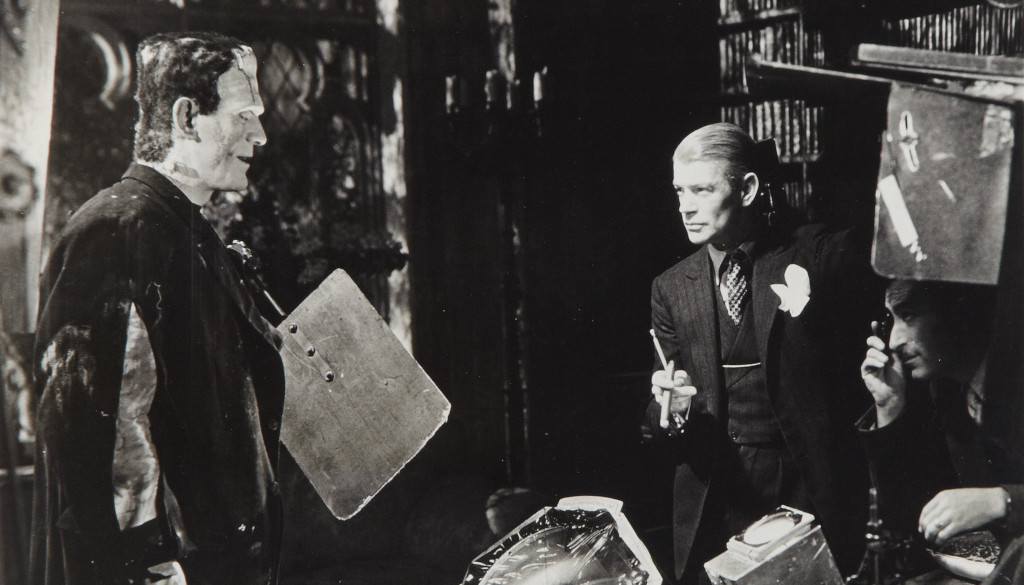
Whale had a mischievous streak that runs throughout his work, and here he seems positively delighted to poke holes in the seriousness of the monster movie. The film can move from genuine horror to broad comedy without collapsing under the weight of either. Una O’Connor’s Minnie is a perfect example. She reacts to everything around her with the sort of theatrical panic that would be unbearable in another film, yet here it becomes part of the movie’s strange rhythm.
The humour doesn’t undermine the horror. It makes the horror stranger.
And of course, there is the Bride herself.
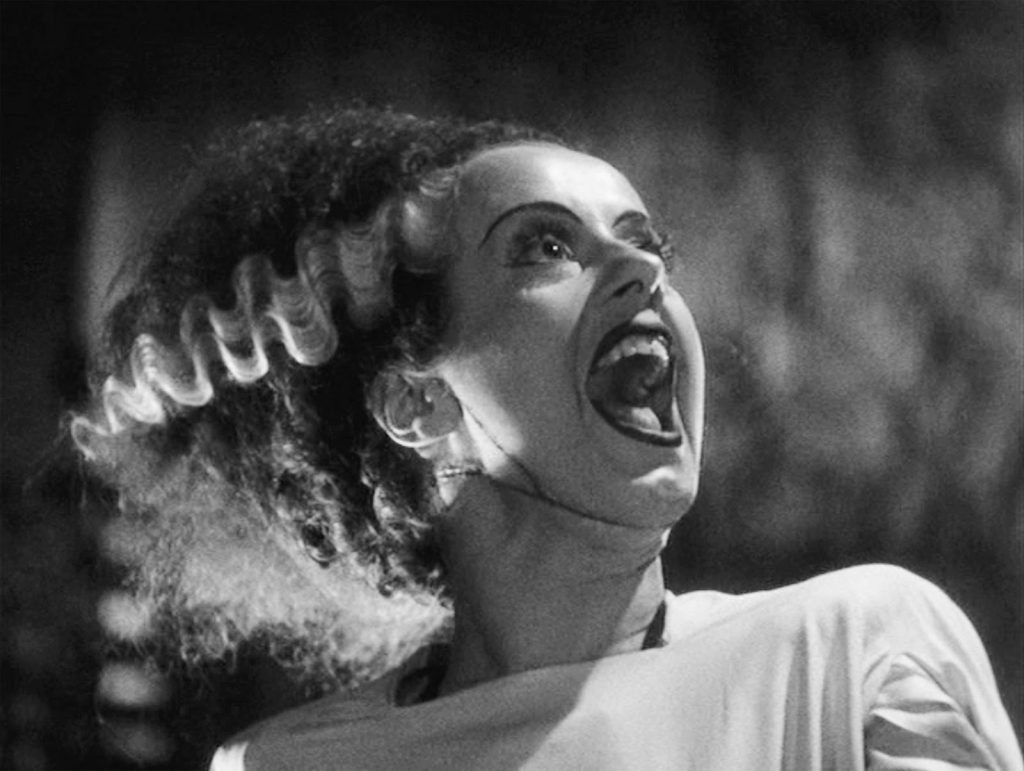
Elsa Lanchester has barely been on screen before the film has already built an enormous amount of anticipation around her. The whole bloody thing is essentially one giant cinematic promise that eventually delivers one of horror’s most recognisable images.
The laboratory erupts into another mad experiment. Electricity crackles. Machinery groans. Everyone looks suitably terrified. Then the Bride comes alive.
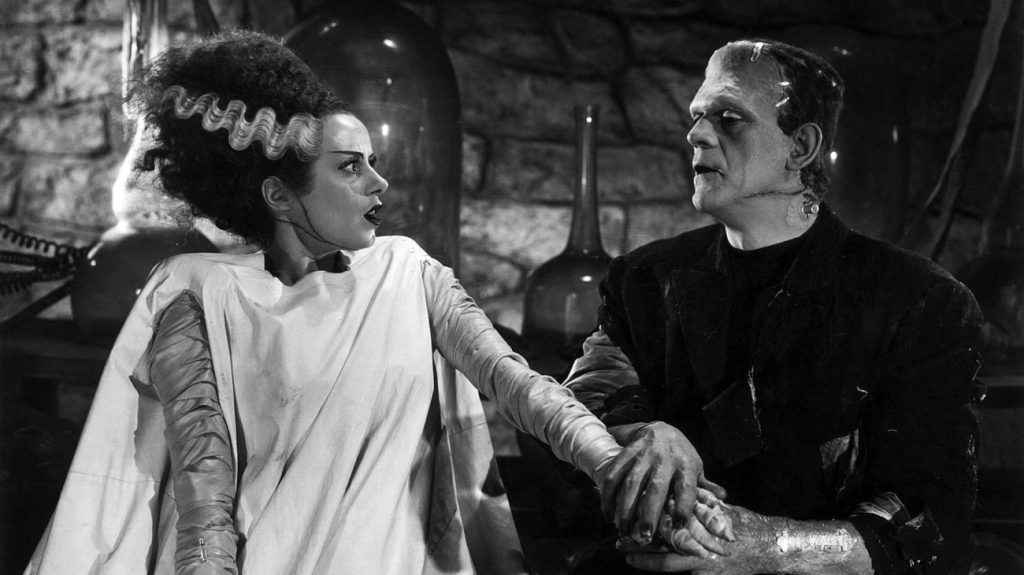
Lanchester’s appearance is extraordinary. The hair, of course, is iconic, but it is the physical performance that makes the character memorable. The Bride doesn’t simply wake up and look confused. She wakes up and immediately decides that she wants absolutely nothing to do with the Monster.
Which, to be fair, is understandable. He is enormous, covered in scars, has spent the preceding film murdering people and has apparently been told that she’s his girlfriend without anybody bothering to ask her opinion.
The Bride’s reaction is one of the great horror movie moments precisely because it destroys the expectation that the Monster will finally get his happy ending. He wants companionship. She wants to get the fuck away from him. The entire doomed relationship is over almost as quickly as it begins.
There is also a fascinating amount of subtext running underneath all the madness. Whale was openly gay, as was Ernest Thesiger, and modern readings of the film have paid considerable attention to its themes of outsiders, unconventional relationships, and the image of two men collaborating to create life. While film historians still argue over how much of this was conscious design versus an organic byproduct of Whale’s worldview, the material is certainly there to be interpreted.
The important thing is that you don’t need to spend seventy minutes with a notepad trying to decode it to enjoy the movie.
Want old-school horror? It’s got you covered.
Want gothic melodrama? Absolutely.
Want mad science? There’s enough electricity in here to light up Trafalgar Square.
Want comedy? Dr Pretorius has entered the building.
Want practical effects? Pull up a chair.
Want a tragic monster story? Boris Karloff is waiting.
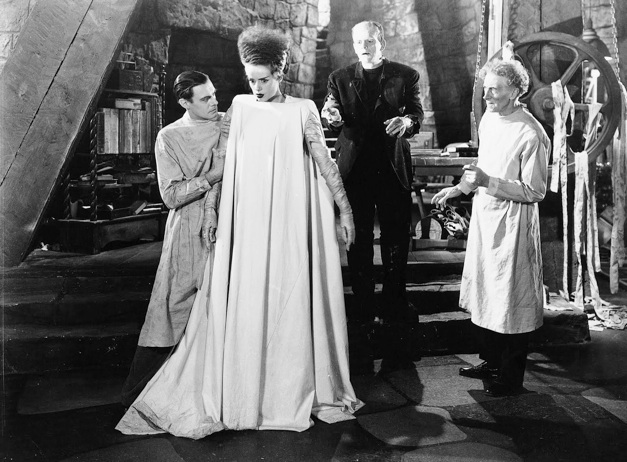
James Whale was initially reluctant to return for a sequel, but when he did, Universal gave him complete creative control. He didn’t just order a retread; he used the budget to expand the original mythology, creating a film that the BFI now ranks among the absolute peak of 1930s cinema.
Frankenstein is a landmark.
Bride of Frankenstein is a fucking experience.
It is darker and lighter at the same time. It is more tragic and more ridiculous. It has better supporting characters, stranger ideas and one of the most memorable endings in the history of horror.
Ninety years later, Bride of Frankenstein still feels alive.
Which, given the subject matter, seems entirely appropriate.
Leave a Reply