
Step away from the mirror and put down the hairbrush, because we are about to conjure the most velvet-voiced nightmare of the 90s. If Freaks was the raw, mud-caked foundation of the macabre, then 1992’s Candyman is the gothic cathedral built right on top of it—constructed out of rusty hooks, urban decay, and about two hundred thousand very real, very grumpy honeybees.
This isn’t your average teenagers getting poked in the woods slasher. Candyman is a sophisticated masterpiece that swapped the campy forest for the concrete labyrinth of Chicago’s Cabrini-Green. It took Clive Barker’s visceral imagination, added a haunting Philip Glass score, and gave us a villain so iconic that Tony Todd’s baritone voice still rings in our ears like a swarm of angry hornets.
From Liverpool to the Windy City
Before he was the writing on the wall, the Candyman lived in the pages of Clive Barker’s short story, The Forbidden. In Barker’s original vision, the story was set in a desolate housing estate in Liverpool, England, and focused heavily on the British class system. The titular ghost was a pale, patchwork-clothed figure with a bright yellow beard—hardly the imposing shadow we know today.
Enter director Bernard Rose. Rose saw the potential for something much more resonant in an American context. He realized that the urban legend wasn’t just about class; in America, it was inextricably tied to race, housing projects, and the “othering” of marginalized communities.
Rose moved the production to Chicago and set his sights on Cabrini-Green. At the time, Cabrini-Green was one of the most notorious public housing projects in the country—a place the rest of Chicago treated like a forbidden zone. By filming on location, Rose didn’t just get great production value; he captured a palpable sense of dread that no Hollywood backlot could ever replicate.
The Legend of Daniel Robitaille
In a move that elevated the film from a standard slasher to a tragic gothic romance, Rose and Tony Todd crafted a backstory for the villain that is as heartbreaking as it is horrifying.
The Candyman wasn’t always a monster. He was Daniel Robitaille, a talented Black artist in the late 19th century. He was the son of a formerly enslaved man who had risen into prosperity, allowing Daniel to become a well-educated portrait artist.
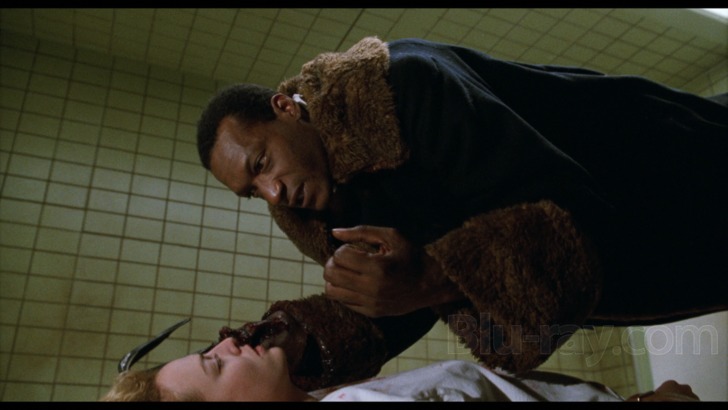
The retaliation was pure, unadulterated evil. A lynch mob, led by the woman’s father, chased Daniel to the outskirts of town. They sawed off his right hand with a rusty blade and smeared his body with honey from a nearby apiary. As a swarm of bees stung him to death, the mob chanted Candyman in mockery. They burned his body on a pyre, and over time his legend became tied to the land that would later become Cabrini-Green.
He didn’t just die; he became a myth. He became the whisper in the classroom and the writing on the wall. He is a ghost fueled by the belief of those who fear him. Without the legend, he is nothing—which is exactly why he takes it so personally when people start doubting his existence.
Enter Helen Lyle—The Skeptic with a Thesis
Our protagonist, Helen Lyle (Virginia Madsen), is the ultimate academic final girl. She’s researching urban legends for her thesis, and she thinks she’s found the motherlode at Cabrini-Green.
Helen is the classic skeptic. She looks at the stories of the Candyman—the murders through bathroom mirrors, the hook-handed figure in the shadows—and sees them as a sociological coping mechanism for a community living in constant fear of real-world violence. She’s so confident in her logic that she does the unthinkable: she stands in front of her apartment mirror and says the name five times.
Candyman. Candyman. Candyman. Candyman… Candyman.
Nothing happens. At least, not at first. But Helen’s arrogance has rung a cosmic dinner bell. By trying to debunk the legend, she is effectively trying to kill the Candyman. And if there’s one thing a supernatural slasher hates more than a chainsaw-wielding Ash Williams, it’s a grad student with a clipboard and a lack of faith.
Tony Todd—The Hook, the Voice, the Presence
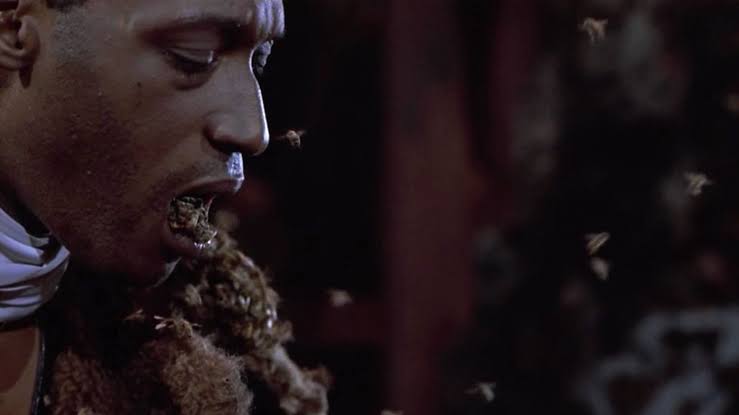
Standing at 6’5″ with a voice that sounds like it was forged in the center of the earth, Tony Todd turned the Candyman into a Universal Monster for the 1990s.
Early in development, various casting ideas were discussed, but Tony Todd ultimately defined the role. Todd brought a regal, seductive menace to the part. He isn’t just a killer; he’s a dark lover, a tragic poet who wants Helen to be his victim so they can be immortal together.
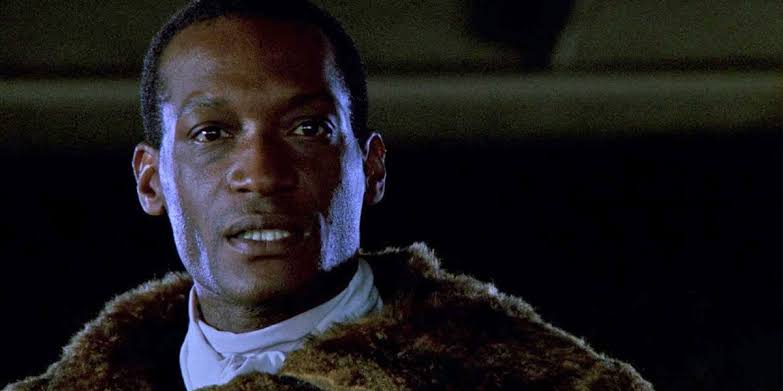
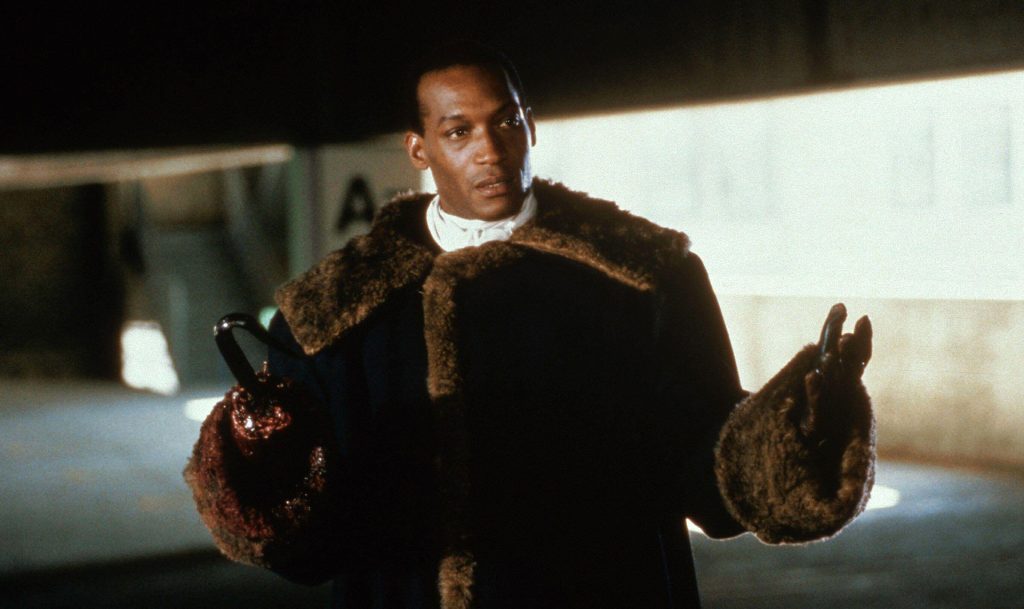
When he finally appears to Helen in that parking garage, he doesn’t run at her with a knife. He drifts toward her, draped in a heavy fur coat, and utters that iconic line:
“I am the writing on the wall, the whisper in the classroom. Without these things, I am nothing. So now, I must shed innocent blood. Come with me.”
It’s not a threat; it’s an invitation. Todd’s performance is so hypnotic that you almost forget he’s got a bloody stump with a hook jammed into it.
Almost.
Blackouts and Bees
While Candyman leans heavily into psychological horror, it doesn’t skimp on the practical-effects-driven gore that we love. But instead of the high-energy splatstick of Evil Dead, this is a slow-burn horror.
The Bathroom Mirror Murder
One of the most effective scares in the movie is based on a real-life tragedy in Chicago. A woman named Ruthie Mae McCoy was actually murdered in her apartment by intruders who came through the opening behind her bathroom mirror (a design flaw in many projects). Rose took this real-world nightmare and infused it with the supernatural. When Helen investigates the site, the combination of cramped spaces and the threat of the other side of the mirror is peak atmospheric horror.
The Bee Scene
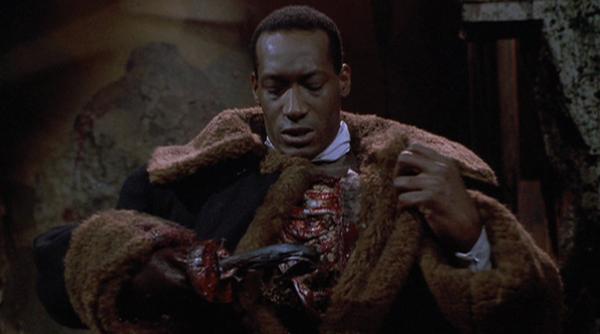
You want practical effects? Let’s talk about the bees. In the climactic scenes, Tony Todd had to film with thousands of live honeybees inside his mouth and on his chest. There was no CGI here, folks. Todd has stated in interviews that he negotiated additional compensation for each bee sting and received over twenty stings during filming.
Because she was allergic to bees, special safety precautions were taken during filming to protect Virginia Madsen during the live-bee sequences. Talk about method horror! That scene where the Candyman opens his coat to reveal his hollow, bee-filled ribcage is a masterclass in grotesque beauty. It’s the kind of “wow” moment that defines the genre.
The Gaslighting of Helen Lyle
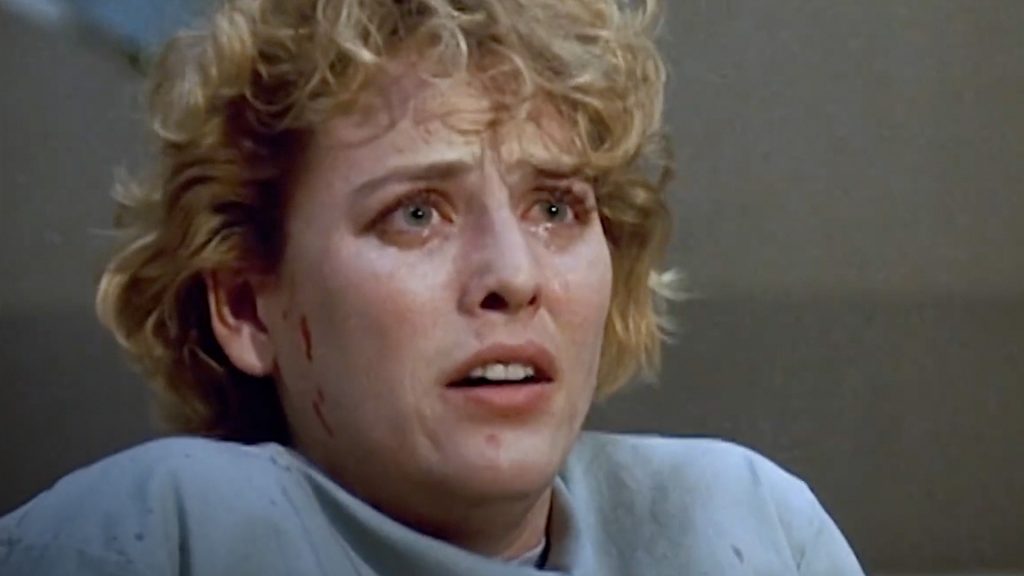
The middle act of Candyman is a brutal exercise in psychological torture. The Candyman doesn’t just want to kill Helen; he wants to dismantle her life. He murders her friend Bernadette, kidnaps a baby, and frames Helen for the crimes.
Watching Helen go from a confident, rational academic to a blood-soaked patient in a psychiatric ward is harrowing. The Candyman is effectively writing her into his legend. He’s showing her that her normal world—her cheating husband, her tidy apartment, her academic peers—is just as flimsy as the myths she was studying.In one of the film’s most powerful moments, Helen tries to prove her innocence by summoning the Candyman in the hospital. When he appears and brutally kills her psychiatrist, the transition from sanity to supernatural chaos is complete. She has no choice but to follow the hook.

The Pyre and the Sacrifice
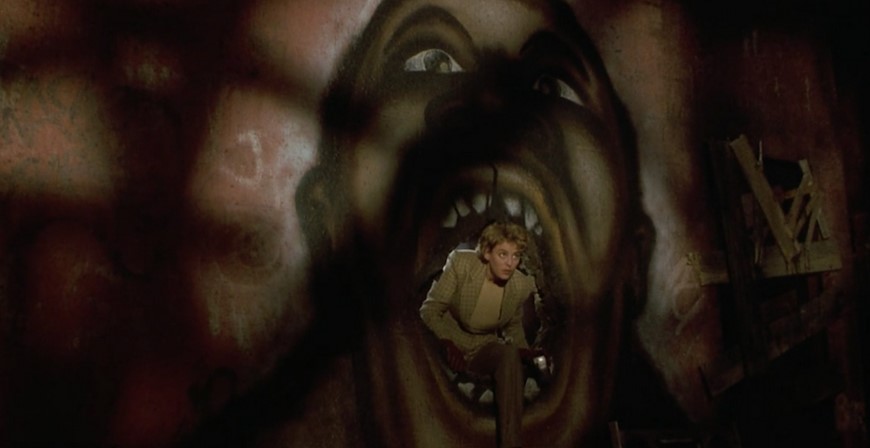
The finale takes us back to the heart of Cabrini-Green. The residents have built a massive bonfire for the neighborhood’s annual celebration. Hidden inside the woodpile is the Candyman’s lair, where he holds the kidnapped baby, Anthony.This is where the movie goes full Gothic horror. Helen crawls into the pyre to save the child. The Candyman is there, waiting for her. He thinks they are going to burn together and become a new, combined legend.
But Helen has one last bit of normal strength left. She wounds the Candyman during the struggle as the fire consumes the pyre, saves the baby, and crawls out of the inferno just as she succumbes to her wounds. She dies a hero, but in the world of Candyman, death is just a career move.

The New Legend is Born
The ending is the ultimate gotcha moment. Helen’s husband, Trevor (the world’s biggest jerk, played to perfection by Xander Berkeley), is standing in front of his bathroom mirror, weeping over his lost wife while his new, younger girlfriend is in the next room.
He whispers her name.
Helen. Helen. Helen. Helen. Helen.
And just like that, the cycle begins again. Helen appears behind him, looking like a charred, vengeful angel with a hook of her own. She guts him like a fish, and the movie ends on a high note of horror movie justice. The legend didn’t die; it just got a new face.
Why Candyman Still Stings
Candyman remains a top-tier cult classic for several reasons:
The Social Commentary: It’s a horror movie that actually has something to say about how we treat our cities and the people in them. It uses the monster to highlight the real monsters of neglect and prejudice.
The Score: Philip Glass’s haunting use of piano and choral arrangements gives the film an operatic feel. It elevates the slasher elements into something that feels ancient and inevitable.
The Visuals: From the overhead shots of Chicago’s highways (looking like a circuit board) to the graffiti-covered walls of Cabrini-Green, the film is a feast for the eyes.
The Sweets to the Sweet Spirit: It balances the grotesque with a strange, dark romance. It’s a movie that makes you feel for the villain even as he’s sliding a hook into someone’s gullet.

Final Thoughts—The Hook Never Truly Leaves
Bernard Rose’s Candyman is a rare beast: a thinking person’s slasher that still delivers the red stuff. It proved that you could take the visceral thrills of the 80s horror era and wrap them in a layer of gothic tragedy and social awareness.
It made Tony Todd a legend, gave us a killer ending, and ensured that none of us would ever look at a bathroom mirror the same way again. It’s a film that demands to be told and retold by our faithful believers.”
“Be my victim.”
It’s an offer we’re still happy to accept.
Leave a Reply to Grimmfest Interview: Talking Poverty and Cultural Richness With Remington Smith Cancel reply