Some martial arts movies are built around discipline, elegance, and the poetry of physical movement. Fatal Flying Guillotine prefers to treat the human body like an object that can be launched through the air at alarming speeds before eventually losing its head to a spinning metal hat. Released in 1977 during the fevered height of the independent Taiwanese and Hong Kong kung fu explosion, Raymond Lui’s film is less concerned with narrative sophistication than with overwhelming the audience through sheer velocity, noise, and glorious mechanical carnage.
To watch it today is to experience a specific, localized brand of 1970s grindhouse mania, a film that ignores the traditional artistic architecture of cinema to deliver an unrestrained spectacle of motorized headwear and severed limbs.
The mid-to-late 1970s was a period of frantic desperation for independent martial arts producers. The towering shadow of Bruce Lee had left a void that could not be filled by mere imitation alone, and the major studios like Shaw Brothers were dominating the market with lavish, historical epics. The independent sector, operating out of shoestring budgets and dusty Taiwanese backlots, had to find a different path to survival. Their solution was simple. If you could not afford the pristine production values of a Chang Cheh film, you simply made your movie meaner, faster, weirder, and significantly more violent.
When Ho Meng-hua’s The Flying Guillotine exploded into theaters in 1975, it introduced what remains arguably the most terrifying, conceptually preposterous weapon in the history of exploitation cinema. The device, a silk-domed, bladed hat attached to a long iron chain that could be slung across a courtyard to cleanly encase and remove a man’s head with a single, synchronized tug, became an overnight sensation. It spawned a sprawling cottage industry of unofficial spin-offs, knock-offs, and spiritual sequels. While Jimmy Wang Yu’s Master of the Flying Guillotine is the title that secured legendary status in the West, Raymond Lui’s Fatal Flying Guillotine is the grimy, neglected cousin that deserves a dedicated seat in the pantheon of beautiful cinematic trash.
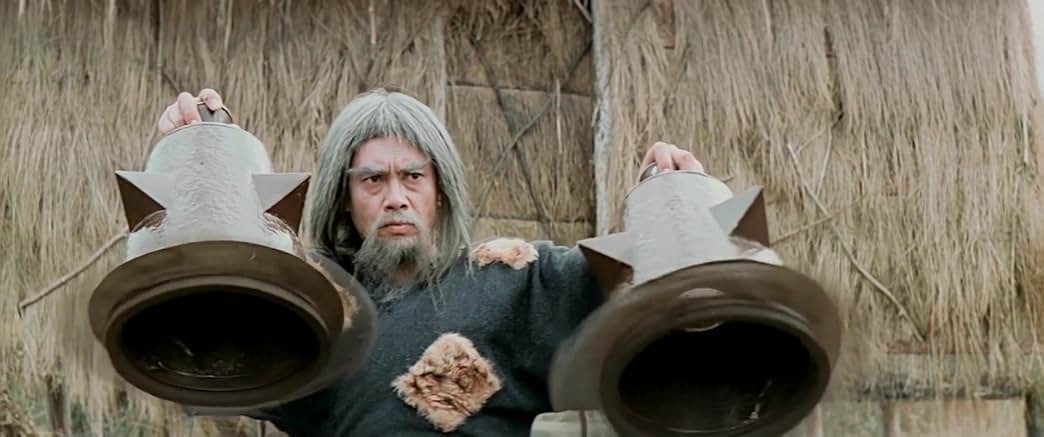
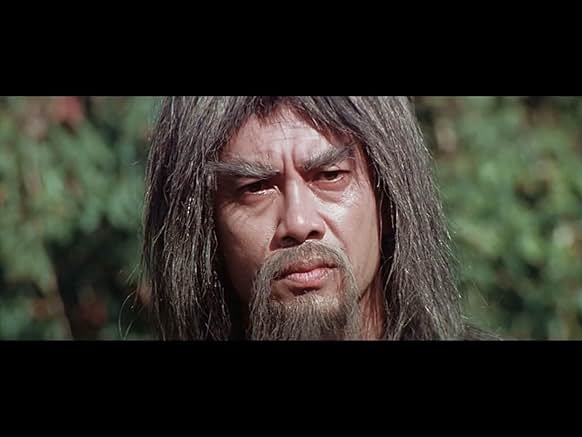
The narrative architect is a fine example of exploitation efficiency, which is a polite way of saying the script is an afterthought designed solely to keep the actors moving from one physical confrontation to the next. The plot operates on a logic of pure collision. We are introduced to the villainous Shen Mo Chao, played with intense, glowering energy by Chen Sing. Chen Sing is almost unrecognizable under a magnificent, aggressively artificial wig and beard combination that makes him look less like a human being and more like a homeless yeti.
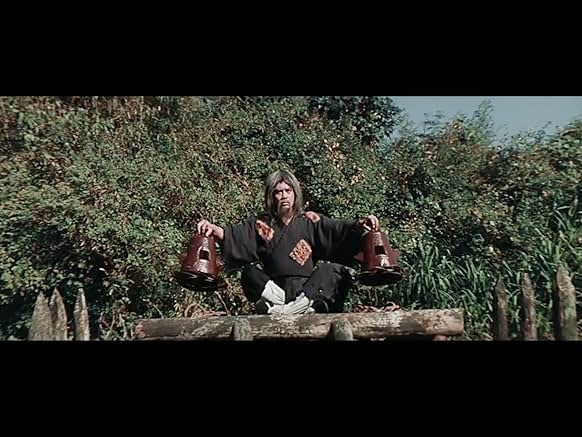
Shen Mo Chao is a deeply unstable martial arts master who has retreated to the ominous Valley of No Return. His retirement hobby is not gardening or meditation; it is sitting on a wooden perch all day, constructing motorized, double-handed flying guillotines, and brutally executing anyone who dares to cross into his territory. The film attempts an explanation for his isolation, claiming he abandoned his family twenty years prior because his heart became weak from over-exercise, a line of dialogue that stands as one of the most brilliant pieces of accidental comedy in the genre’s history.
Naturally, a man who can operate two flying decapitation machines simultaneously is an attractive asset for political corruption. An ambitious, treacherous Prince seeks to recruit Shen Mo Chao to clear his path to the imperial throne, sending a non-stop caravan of martial artists, assassins, and Shaolin representatives into the valley to secure an alliance. None of them return. The valley becomes a graveyard, a structural playground where Chen Sing can launch his whirring, metal contraptions at the camera with rapid frequency.
On the other side of this narrative collision is our supposed hero, Shen Ping, brought to life by the legendary Carter Wong, and his performance here is entirely devoid of standard heroic charm; he is a blunt instrument of physical kineticism.
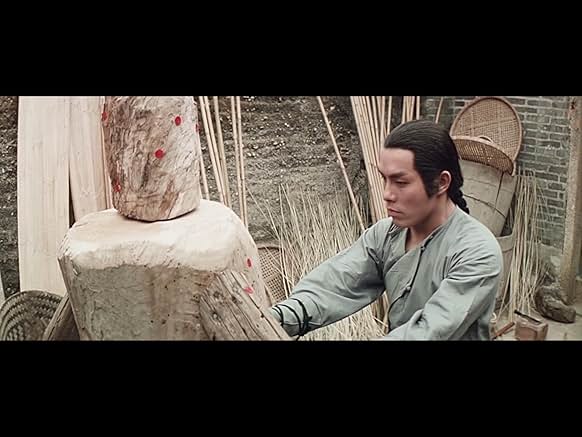
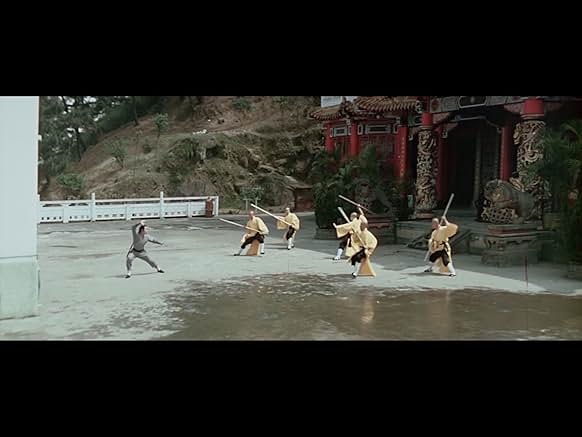
Shen Ping’s personal stakes are wonderfully absurd: his mother is critically ill, and the only way to save her is to secure a sacred medical almanac guarded by a temple of highly stubborn Shaolin monks. In a moment that feels entirely un-Buddhist, the monks refuse to hand over the medical textbook unless Shen Ping undergoes a series of brutal, high-stakes physical trials to prove his worth.
Wong spends the first act of the film aggressively beating up monks in a desperate bid to save his mother, completely unaware that his path is on a direct trajectory toward the Valley of No Return and a confrontation with the dual-wielding guillotine master. The fact that the film hints that the mad hermit and the desperate martial artist are actually long-lost father and son, only to completely forget to resolve or even acknowledge this revelation until the last second because plot gets in the way of arse kicking, is a testament to the beautiful, reckless indifference of the production’s scripting process.
But nobody buys a ticket to a movie called Fatal Flying Guillotine looking for cohesive family drama or a profound exploration of filial piety. You buy the ticket to see the hats fly. And in that specific department, Raymond Lui delivers with a relentless, borderline psychotic commitment to pace. The film runs a lean, hyper-compressed seventy-seven minutes, and it operates under the assumption that if the screen does not feature a fistfight, a spear duel, or a flying decapitation every 120 seconds, the audience will riot. The pacing is so aggressive that it borders on the modern; the editing is hyper-kinetic, chopping through scenes with an erratic, breathless urgency that was likely born out of production panic but manifests on screen as pure, unadulterated energy.
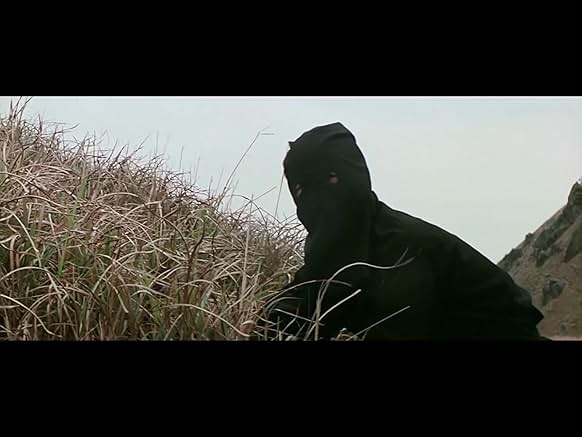
The choreography eschews the long, fluid, single-take wide shots that defined the high-art corner of the genre. Instead, this is close-quarters, high-impact combat. It utilizes a dizzying array of traditional weaponry, spears, three-section staffs, and massive Guan Dao polearms, and filters them through an aesthetic that relies heavily on exuberant, gravity-defying wirework.
The physical performances from the supporting cast, which includes brief, blink-and-you’ll-miss-them appearances by genre fixtures like Mang Hoi, Yuen Bun, and Corey Yuen, are uniformly spectacular in their willingness to endure physical punishment. Characters launch themselves across the frame, bouncing off low-rent studio walls and crashing through wooden furniture with a total disregard for spinal health.
The crown jewel of the film, however, remains the depiction of the title weapon itself. In the original Shaw Brothers features, the flying guillotine was treated as a terrifying weapon of state-sponsored terror, its deployment framed with an air of gothic horror. In Fatal Flying Guillotine, the weapon is treated with the unvarnished glee of a carnival attraction.
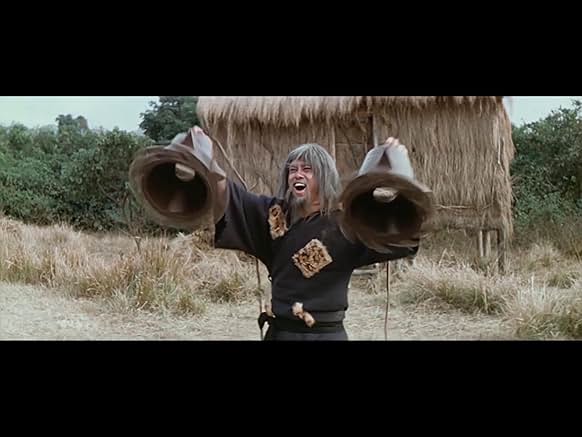
Lui shoots the guillotine sequences with a shameless, exploitative reverence. The camera frequently assumes the perspective of the victim, staring directly into the spinning, metallic maw of the device as it descends from the sky to engulf the lens. The special effects are delightfully tactile and unpolished. When the device clamps down, the film utilizes abrupt, jarring smash-cuts to transition to dummy heads exploding with geysers of bright crimson theatrical blood. It is loud, it is tasteless, and it is endlessly entertaining.
What truly solidifies Fatal Flying Guillotines as a defining artifact of its era is its complete lack of irony. Carter Wong treats his quest for the medical book and his eventual survival fight against the flying hats with the absolute, deadpan seriousness of a high-stakes political thriller. Chen Sing rages on his wooden perch with the genuine, unhinged venom of a classic theatrical antagonist. The movie demands that you accept its reality entirely on its own terms: a world where a weak heart requires twenty years of solo hermit living, where monks demand a high body count before offering medical aid, and where the ultimate expression of military dominance is a bladed hat on a string.
The production design further amplifies this gritty, unhygienic charm. The film moves away from the sterile, brightly lit indoor studio sets of the major Hong Kong operations, spending a significant portion of its runtime in real, outdoor Taiwanese locations. The characters trudge through muddy forests, scale rocky, unforgiving mountain paths, and fight along the edges of gray, overcast lakes.
To analyze Fatal Flying Guillotine using the traditional metrics of high-minded film criticism, character arcs, narrative cohesion, thematic depth, is an exercise in futility. The film doesn’t care about your metrics. It exists as a pure document of physical sensation, an exercise in kinetic excess designed to satisfy a specific, ravenous market that wanted nothing more than to see human bodies pushed to their physical limits in the name of entertainment. It is a work created by cinematic blue-collar workers who had to outwork their lack of resources with sheer, unrelenting enthusiasm and a willingness to try any wild idea that might keep an audience glued to their seats.
Ultimately, Fatal Flying Guillotine remains a vital, fiercely independent milestone of the grindhouse era because it captures the exact, reckless spirit that drove the international explosion of martial arts cinema. It is the sound of an underground scene running at full throttle. It is the celluloid memory of a time when studios were brave enough to build an entire industry around the glorious, blood-soaked spectacle of weaponized headwear.
And god bless it for that.
Leave a Reply