Well, it had to happen at some point, right? Today I’ve reached into the radioactive waste bin of cinematic history and pulled out the ultimate “Why does this exist?” trophy. We are talking about the 1966 anti-masterpiece, Manos: The Hands of Fate.
This isn’t just a bad movie. Plan 9 from Outer Space is fucking Shakespeare compared to this. Manos is a fever dream captured on 16mm film by a fertilizer salesman named Harold P. Warren on a bet. It is the Everest of trash, the Mariana Trench of what-the-hell, and the undisputed heavyweight champion of the “I’m pretty sure the camera operator was asleep” subgenre. Put on your oversized cloak, ignore the goat-legs, and let’s dive into the the movie that makes every other horror film look like Citizen Kane.
The Bet: The Origin Story of a Fertilizer Salesman’s Nightmare
Before we even talk about the plot (and yes, allegedly there is one), we have to talk about how this crime against celluloid happened. Harold P. Warren was a fertilizer salesman from El Paso, Texas. He met Stirling Silliphant (a legendary screenwriter) and bet him that he could make a successful horror movie on a shoestring budget.
At least, that’s how the story goes.
Warren had no experience. He had no equipment to speak of. All he had was a 16mm Bell & Howell camera that required frequent stopping and reloading, contributing to the film’s awkward pacing and shot structure. Explaining why every scene in Manos feels like it’s being interrupted by a glitch in the matrix. It’s also why there is zero sync sound. The film was shot without synchronized sound and entirely dubbed in post-production, often by a very small pool of voice performers. It sounds like a haunted ventriloquist act recorded inside a tin can that is being rolled down a hill. While on fire.
The Plot: A Family Vacation in the Ninth Circle of Hell
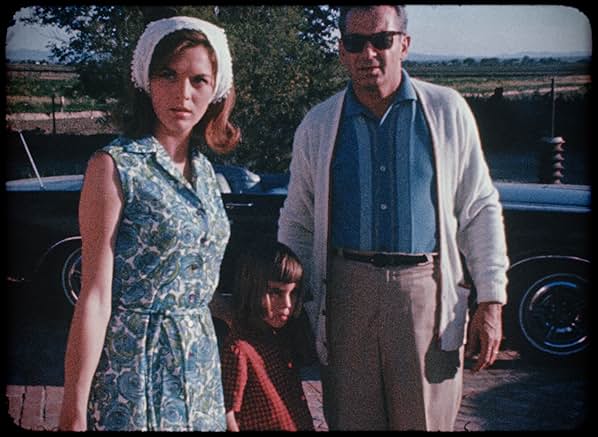
We start with a family: Michael, Margaret, their daughter Debbie, and Peppy the dog. They are driving. And driving. And driving. For the first ten minutes of the movie, we just watch their car move through the Texas desert while a jazz score, that sounds like a cat walking across a vibraphone, plays incessantly.
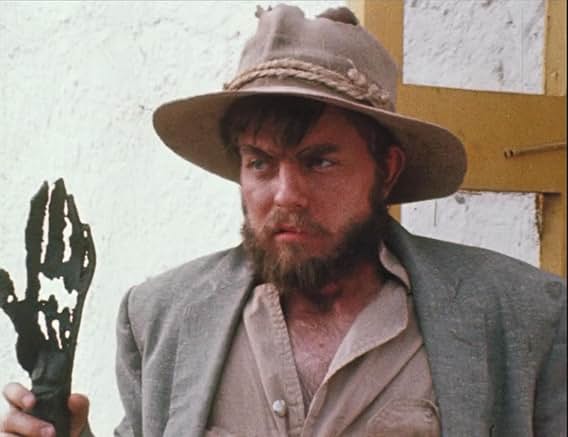
They get lost and end up at a house maintained by a man named Torgo. Now, if you know anything about Manos, you’ll know Torgo is your patron saint. Torgo is portrayed as a strange, goat-legged servant of The Master, implied to be some kind of faun-like creature, but since they didn’t have a budget for prosthetics, the actor (John Reynolds) just stuffed giant packing crates into his trousers. He walks like he’s trying to hide a pair of stolen watermelons in his pants while suffering from a severe inner-ear infection.
Torgo tells them:
“The Master would not approve.”
But Michael, being the hero of this trash-heap, decides that staying at a house guarded by a twitchy goat-man with a staff is a great idea.

The Master: 1960s Satanism on a Budget
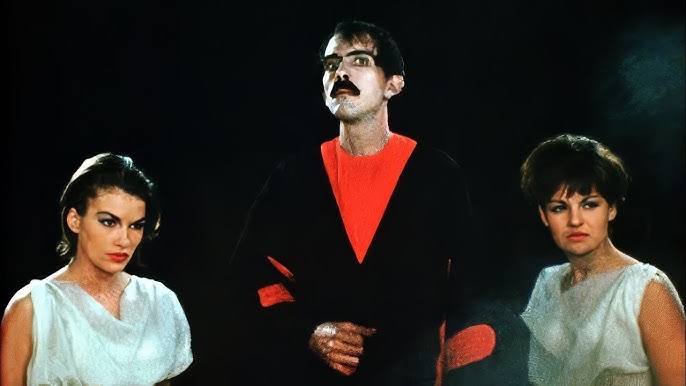
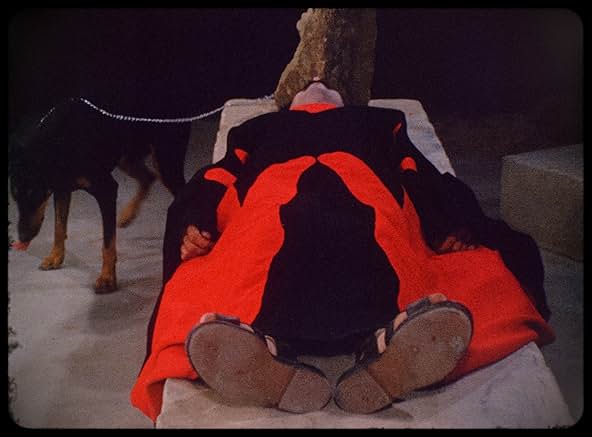
Eventually, we meet The Master. He wears a long black robe with giant red hands on it, hence the title Manos (which literally translates to hands, meaning the film is actually called “Hands: The Hands of Fate” making it the most redundant title in history).
The Master has a mustache that looks like it was drawn on with a Sharpie during a blackout, and he spends most of his time lounging on a stone slab while his wives (a group of women in nightgowns) wrestle in the dirt. It’s not satanic majesty. It’s mid-life crisis in a garage.
The Master’s primary goal seems to be kidnapping Margaret and Debbie to add to his collection of wives. So, Michael tries to stop him, but Michael is about as effective as a wet paper bag. The action scenes in this movie consist of people slowly walking toward each other and then gently falling down.
Torgo: The MVP of Cinematic Absurdity
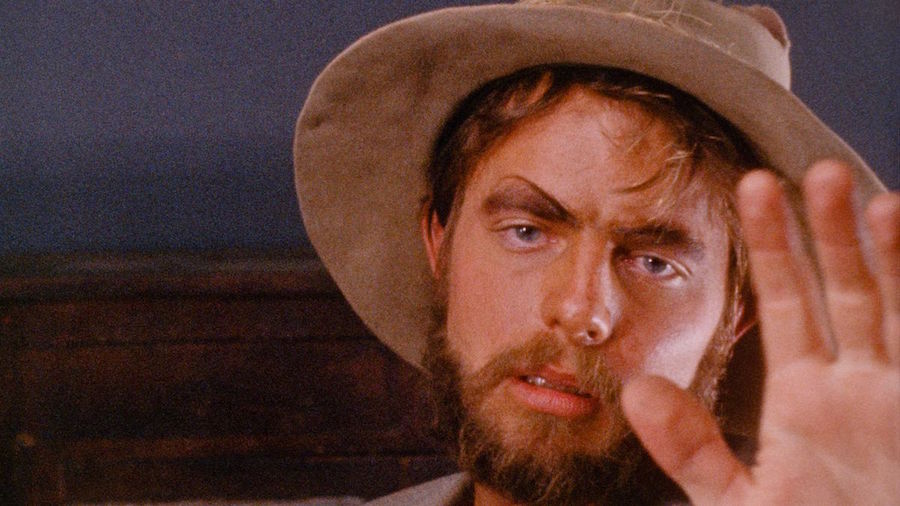
We have to do a deep-dive on Torgo. The actor, John Reynolds, reportedly stayed in character for the entire shoot, which, again accroding to legend, involved taking LSD to deal with the pain of the goat-leg braces. It shows.
Yet, Torgo is the heart of the movie’s appeal. His theme music is a haunting, off-key bassoon solo that plays every time he enters a room. He has a weird obsession with Margaret, he’s constantly being beaten by The Master with a Hand Staff, and his final fate, having his hand burned off and replaced by a stump, is the only practical effect in the movie that isn’t just a cardboard cutout.
Torgo is a tragedy. He’s a monster who just wants to do his job, but he’s distracted by the family’s arrival. In the world of creature features, he’s the budget version of the Hunchback of Notre Dame, if the Hunchback were high on fertilizer fumes.
The Technical Horror: A Masterclass in Failure
As crap movie fans, we love to analyze bad filmmaking, but Manos is in a league of its own.
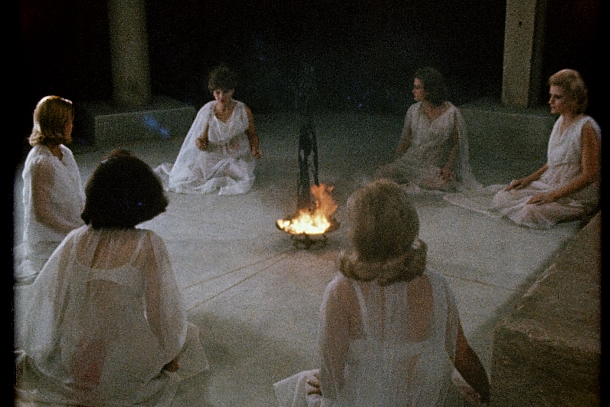
The Night Shooting: They didn’t have lights. So, when they filmed at night, they just used the car’s headlights. This meant the actors had to stand in a tiny circle of light while the rest of the world was pitch black. It’s noir by accident.
The Focus: Or lack thereof. Half the shots are out of focus. So out of focus that I’d advise you don’t watch it drunk, unless you want to see what you had for lunch once again. The camera operator clearly didn’t understand how lenses work, leading to a dreamlike quality that is actually just incompetence.
The Continuity: Objects appear and disappear. The dog dies and then is seen in the background. The sun sets and rises in the same conversation. It’s a surrealist masterpiece if you pretend it was intentional.
The tension and pacing we usually look for is non-existent here. Instead, we have the Rhythm of the Sloth. Everything is slow. Every line of dialogue is followed by a five-second pause where you can hear the ghost of the director’s dignity crying in the background.
The Wives: The Original Real Housewives of El Paso
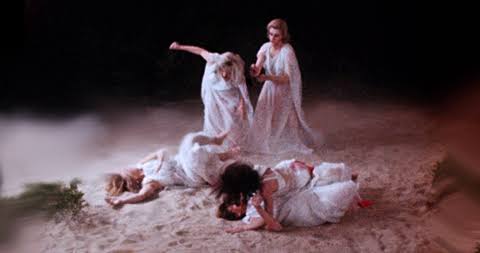
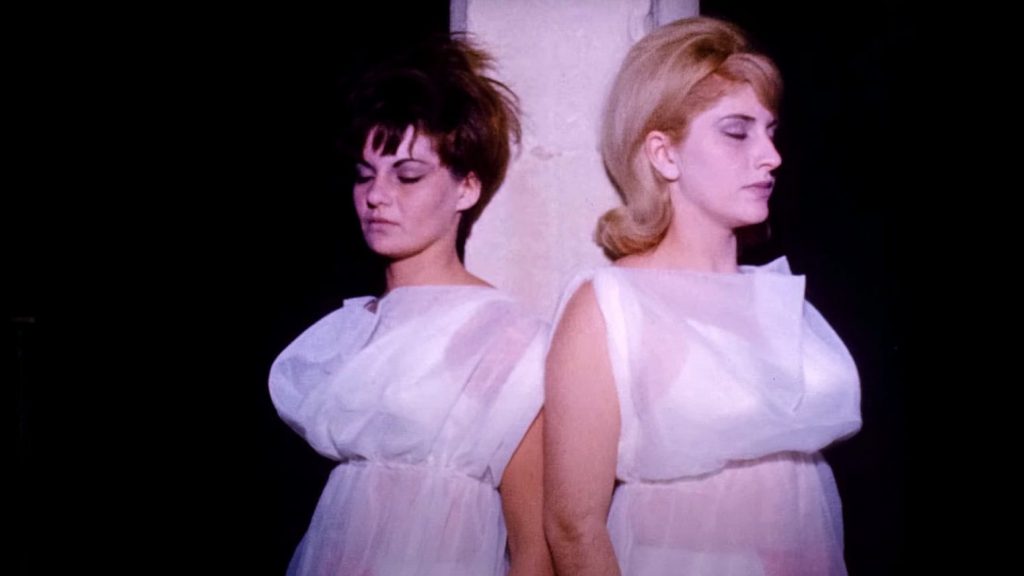
The Master’s wives spend a solid twenty minutes of the movie arguing and wrestling. Why? Because the movie was only 60 minutes long and Warren needed to pad it out to feature-length. So, let’s have the ladies scrap for a soild 20 minutes or so. They roll around in the dirt, pull hair, and talk about who The Master likes best. It’s like a very low-budget version of the Karnstein trilogy, but without the Hammer production, the blood, the sexy dames, or the talented actors. It’s pure exploitation trash, but it’s so poorly lit and staged that it’s more confusing than scandalous.
The Ending: The Bleakest 74 Minutes Ever Filmed
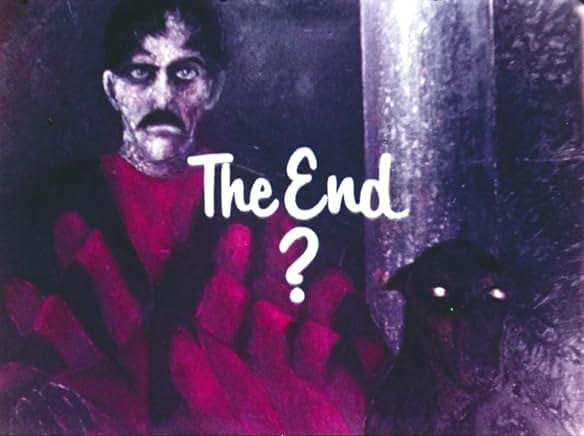
The ending of Manos is surprisingly dark. Michael, Margaret, and Debbie don’t escape. There is no heroic rescue.
In the final scene, another couple gets lost in the desert and ends up at the house. They are greeted by a new Torgo. Then we see Michael, now in a robe with red hands, greeting them. He has been converted.
It’s the same “You’re Next!” ending as Body Snatchers, but without the tension, the budget, or the talent. It’s just… sad. The movie ends with a credit sequence that repeats the same clips we just saw, because, you guessed it, they needed more footage to pad out the runtime.
The Legacy: From Fertilizer to Cult Phenomenon
How did this movie go from a forgotten Texas tax write-off to a legendary cult classic? One word: Mystery Science Theater 3000 (MST3K).
In 1993, the crew of the Satellite of Love found Manos and shared it with the world. It became their most famous episode because the movie is so fundamentally broken that the riffing becomes a necessity for survival. For the Cult Horror Geek, Manos is the final boss. Once you’ve seen it, you can handle anything. You can survive Troll 2. You can laugh through The Room. You can even tolerate a remake of The Thing with bad CGI.
Manos hardens you. It teaches you that horror isn’t always about what’s on screen, sometimes it’s about the fact that someone actually made this shit in the first place.
Why I Love the Trash
I love Manos because it is the ultimate expression of creative hubris. Harold Warren thought he could be a filmmaker. He failed in every possible way, and in doing so, he created something that is immortal.
The practical effects (the hand staff, the goat legs) are legendary because they are so bad they transcend criticism. The humor is unintentional but constant. The what the fuck energy is the sheer, unmitigated gall of the production. It’s a movie that reminds us that DIY doesn’t always mean good, but it always means human. You can feel the struggle of the actors. You can see the bugs flying into the lights. You can smell the Texas heat. It’s a Midnight Movie that you watch once to say you did it, and then you spend the rest of your life trying to explain Torgo to people who will never understand.
The Hands of Failure
Manos: The Hands of Fate is a 0/10 movie that is an 11/10 experience.
The Humor: Is everywhere. Every frame is a joke told by the universe.
The Tragedy: Is the fact that John Reynolds died by suicide shortly after the film’s production, a tragic event unrelated to the movie’s later cult status, but one that ads a darker layer to Torgo.
The Geekery: Is in the trivia. The 16mm camera, the dubbing, and the fact that the film premiered in El Paso in 1966 to local curiosity, but it failed to secure wide distribution and quickly faded into obscurity. It would’ve been kinder if everyone had just walked out in shame.
Say what you want, Manos: The Hands of Fate might be an endurance test for your brain to survive without shutting down your entire body in protest, but at its heart it is the bottom of the barrel, and it is glorious because of it.
Leave a Reply to The Exorcist II: The Heretic (1977) — The Locusts Strike Back Cancel reply