If Darkthrone’s answer to the early nineties was to retreat into a cold, filthy garage and drag Celtic Frost through the mud, Immortal took a completely different look at the Norwegian landscape and decided to turn it into an avalanche.
1993 was the year the second wave truly froze over. While much of the notorious early Norwegian scene was rapidly turning into a real-world circus of headlines and sensationalism, Abbath and Demonaz stayed over in Bergen, looked up at the mountains, and decided to build an entire imaginary realm of perpetual winter instead.
The result was Pure Holocaust.

Decades after its release, it remains one of the most relentless, hyper-speed assault records ever committed to tape.
To appreciate what Immortal pulled off here, you have to look at what came immediately before it. Like Darkthrone, these guys didn’t drop out of the sky as fully formed black-metal purists. They’d spent the late eighties and very early nineties bashing out filthy, brutal death metal in bands and projects like Old Funeral and Amputation.
Their 1992 debut as Immortal, Diabolical Fullmoon Mysticism, was a solid, moody piece of early black metal that still carried some of that heavy death-metal weight, packed with acoustic passages and atmospheric breaks. It was good, but Immortal were still finding their feet and testing the limits of what they wanted to be.
With Pure Holocaust, they stripped out almost every piece of fat, locked themselves into Pytten’s famous Grieghallen Studio, cranked the tempo to an ungodly speed and barely hit the brakes for thirty-four minutes.
There are no acoustic interludes.
There are no synth-driven ambient tracks.
There is no atmospheric filler.
Just pure, icy velocity.
What sets this record apart from much of the 1993 Norwegian crop is the sheer physical execution. Demonaz’s guitar work on tracks like Unsilent Storms in the North Abyss and The Sun No Longer Rises isn’t just fast; it’s picking at a speed that feels less like human playing and more like a mechanical saw cutting through a fjord.
It’s relentless, high-register tremolo work that creates a wall of frost without ever losing the underlying riff. What makes listening to it today almost tragic is knowing that this style of playing was so physically punishing that Demonaz eventually developed serious problems with his arm and was forced to stop playing guitar live.
His wrists eventually paid the price for making music that sounded like a blizzard, and you can hear that absolute, self-destructive commitment in every single bar.
Then there’s the drums.
The album artwork is famously associated with Grim, complete with that iconic, grim-visaged corpse-paint image, but it was actually Abbath who laid down all the drum tracks in the studio. He battered those skins like a man possessed.
It’s not the clinical, triggered, robotic blast-beat precision you get in modern extreme metal. It’s furious, organic, driving acoustic drumming that feels like it’s constantly on the absolute razor-edge of flying off the rails, keeping pace with Demonaz’s maniacal right wrist through pure brute force.
Where other bands were trying to sound evil, Immortal sounded cold. Literally cold.
Pytten’s production on Pure Holocaust deserves a medal of its own. In the same Grieghallen studio where Enslaved were building sprawling Viking epics and Mayhem were fashioning dark, claustrophobic nightmares, Pytten gave Immortal a sound that was razor-sharp and abrasive without turning the whole thing into an undifferentiated wall of noise.
He captured the acoustics of Grieghallen so brilliantly that the drums sound cavernous and the guitars feel blinding and vast, like being caught on an open ridge in the middle of a blizzard with nowhere to shelter, and that was always the secret weapon of Immortal.
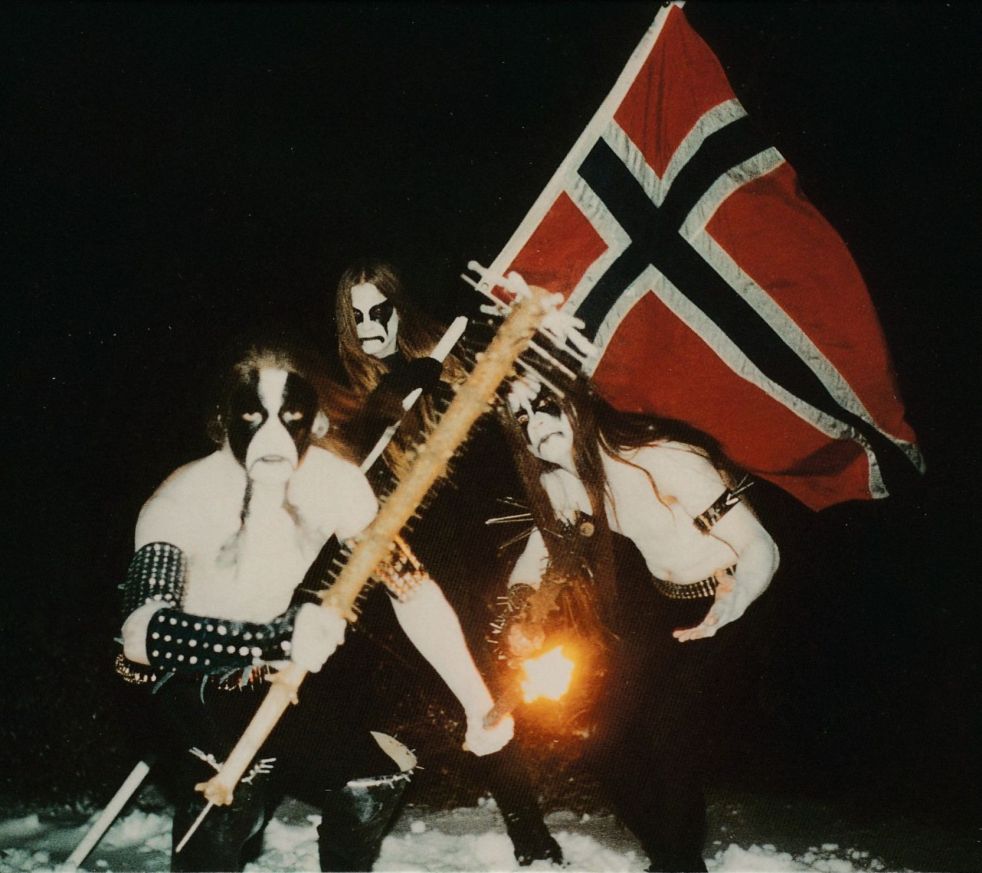
They didn’t need to try and shock Sunday school teachers to make terrifyingly intense music. They didn’t need the real-world horrors or the political posturing. They created Blashyrkh, a mythical, frozen realm ruled by frost, battles, and darkness , and treated it with the total, absolute seriousness of an ancient saga.
It was pure escapism, but it was escapism driven by some of the most aggressive, uncompromising heavy metal ever written.
Abbath’s vocals on this record established his signature croak, a rasping, gargling, amphibian howl that sounded completely unlike the high-pitched screeches dominating much of the rest of the scene. It gave tracks like As the Eternity Opens and A Sign for the Norse Hordes to Ride a weird, primal character that made the whole experience feel slightly unhinged.
Pure Holocaust helped cement Immortal as one of the defining bands of the Norwegian black-metal second wave.
More importantly, it proved that you could play at breakneck, dizzying speed for a whole record without the songs turning into an indistinguishable blur of noise. Beneath that blinding white wall of sound, every track has hooky, memorable riff transitions hidden just below the surface. They were still writing actual heavy metal songs, they were just delivering them at terminal velocity.
It’s an album that takes the black-metal rulebook, dips it in liquid nitrogen, and smashes it into a thousand pieces.
If A Blaze in the Northern Sky was the sound of four blokes locking the door against the world, Pure Holocaust was the sound of two blokes opening the front door, stepping out into a storm, and demanding that the storm step aside.
Frostbitten, furious, and utterly fantastic.
Leave a Reply