WARNING! POTENTIAL SPOILERS! So don’t moan that I didn’t warn you.
If there is one thing I’ve learned from years of rummaging through the damp, flickering basement of the horror genre, it’s this: never, under any circumstances, take a job that involves overnight shifts and industrial quantities of formaldehyde. But thank the unholy powers that be that Rebecca Owens didn’t get that advice, because The Mortuary Assistant is the kind of nerve-shredding experience that makes you want to high-five a corpse.
Directed by Jeremiah Kipp and based on the indie nightmare machine created by Brian Clarke, this isn’t a limp ‘we slapped a familiar title on it and hoped for the best’ adaptation. This thing actually understands what made the original game tick. The slow dread, the suffocating routine, the creeping sense that something is deeply, cosmically wrong, and then feeds it through a cinematic lens until it comes out twitching, smelling faintly of formalin and hubris.
This is not a ‘run down a hallway while something screams behind you’ kind of horror film. This is ‘carefully perform a delicate, clinical procedure while your brain quietly informs you that something in the room is watching you blink’. It’s precise, it’s suffocating, and when it decides to snap, it does so with the enthusiasm of a mousetrap made of pure malice. And yes, it knows exactly how to terrify you with the mundane, turning a night shift into a gauntlet from which only your sanity might escape.
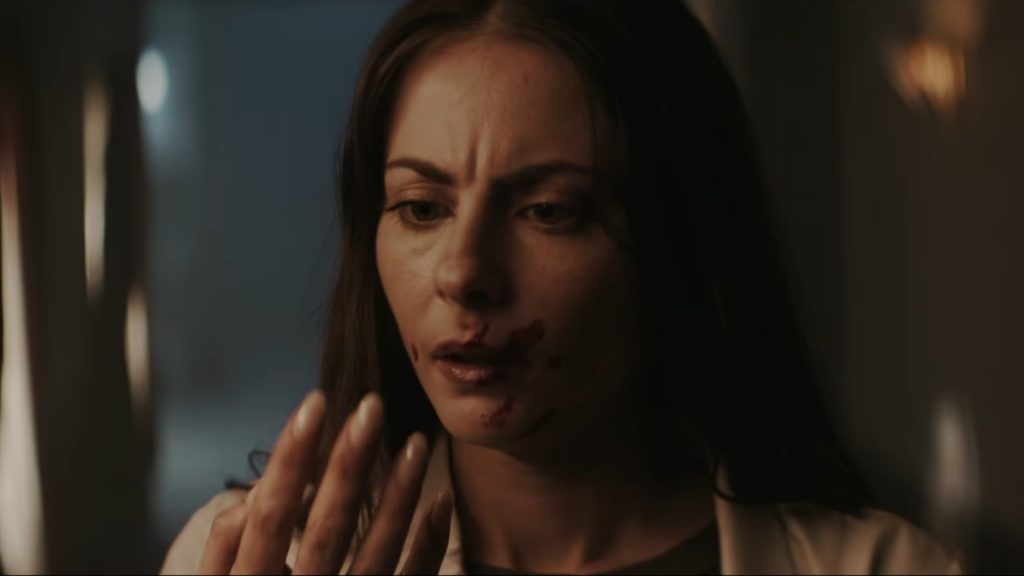
Our protagonist, Rebecca (played by Willa Holland), is a recent mortuary school graduate trying to get her life back on track. She’s not a plucky final girl or a wisecracking survivor, she’s a professional. Or at least, she’s trying very hard to be one while carrying enough emotional baggage to fill a luggage carousel.
She lands a job at River Fields Mortuary under the watchful eye of Raymond (Paul Sparks), a man who somehow manages to be reassuring and deeply unsettling at the same time. He talks like everything is completely normal, which is exactly what makes you suspicious. This is not a guy who panics. This is a guy who has already seen something that removed his ability to do just that and decided a calm detachment is the superior terror.
Rebecca’s first solo night shift is where things go sideways. Not immediately, oh no, this film has patience. It lets her settle in, go through the motions, perform the work. The routine becomes the trap. The quiet becomes the weapon. And then, just as you start feeling safe, the first body moves. Or maybe it didn’t move. Or maybe it was always moving and you just noticed now. That subtle, creeping doubt is what Kipp leans on like a sadistic metronome.
Here’s where the film pulls its best trick: it makes the day-to-day process of mortuary work absolutely riveting.
We’re talking about trocar insertions, arterial injections, jaw wiring, the whole clinical playbook. And the film doesn’t rush it. It lingers. It lets you sit with it. You hear every metallic clink, every soft mechanical hum, every wet, unpleasant sound that reminds you that the human body is, at the end of the day, a complicated bag of problems.
There’s a pacing to these sequences that is hypnotic. You start to anticipate the steps. You know what tool comes next. And then the thing that isn’t supposed to be there appears, and the film has you questioning whether your brain is even wired correctly. That combination of familiarity and violation is why it’s so unsettling: the terror feels intimate. It’s personal. And it’s just plain disgusting, in all the right ways.
This isn’t a slasher. There’s no masked man kicking down doors or launching himself through windows. This is pure demonic possession. The horror here is quieter, nastier, and far more invasive.
The entity at work isn’t interested in a quick kill. It lingers. It observes. It manipulates. The film leans heavily into the idea that you can’t trust your own eyes. It’s the kind of horror that makes you dount your own senses, which is always far more effective than just throwing something loud at the screen.
Rebecca’s past plays into this in a big way. Her struggles with addiction and her relationship with her father aren’t just background details, they’re pressure points. The demon pokes at them, twists them, uses them as doorways for it to seep through.
Instead of feeling like a lecture wrapped in a film, it feels like the entity has found the most vulnerable parts of Rebecca and decided to move in. Every shadow, every sudden twitch, every ambient groan feels personalized, as if the morgue itself is reading her CV and deciding what to attack first.
One of the film’s strongest weapons is its restraint. It doesn’t over-explain what’s happening, and it doesn’t give you a neat little rulebook to follow. What it does give you are glimpses:
Something standing where nothing should be standing.
A shape that doesn’t quite resolve into a person.
A movement that you can’t seem to process correctly.
These moments are brief, but they linger. They stick with you because the film doesn’t try to immediately justify them. And when the thing finally starts escalating, creeping, slithering, contorting, the terror isn’t cheap. It’s deliberate, almost sadistic, and it hits you in the face without warning.
This is where the film could have easily fumbled it. A premise like this lives or dies on the central performance, and thankfully, Willa Holland absolutely commits.
She doesn’t play Rebecca as a standard archetype. She plays her like someone trying to do a job under increasingly impossible conditions. The fear builds gradually. It’s not instant hysteria it’s exhaustion, terror, frustration, and then, finally, full-blown panic when the situation becomes undeniable. You feel her mental thread stretching, fraying, and sometimes snapping, and it’s utterly relatable.
Paul Sparks, meanwhile, is operating on a completely different wavelength, and it works perfectly. He’s calm, controlled, and just detached enough to make you wonder how much he knows and how long he’s known it. Their dynamic is what keeps the film from drifting off into pure chaos. He provides structure. She provides the emotional core. The horror exists in the space between them.
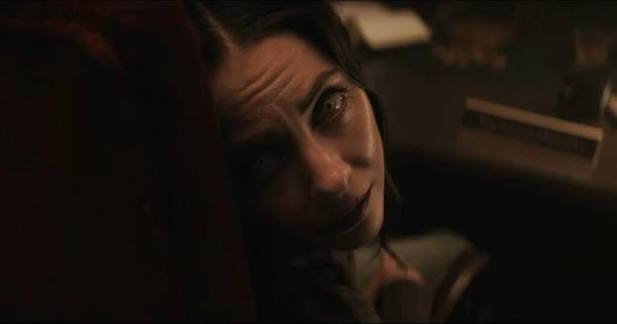
As for the demon creature, it is an utter bastard and a visual marvel. It looks like the kind of thing someone designed while hallucinating after a three-day sleep deprivation experiment. It skulks, slithers, and pops up in ways that defy physics and you love every minute of it. The practical FX team deserves every award that exists for making latex, prosthetics, and silicone genuinely terrifying without needing a single CG enhancement. This is old-school horror craftsmanship, and it’s executed with fanatical precision.
The Mortuary Assistant isn’t trying to redefine horror, and it doesn’t need to. What it does is take a very specific concept, a night shift in a mortuary, and push it to its absolute limit while keeping the terror grounded in human experience.
It’s methodical. It’s precise. It’s the kind of movie that creeps under your skin and then sets up camp there. This is horror that rewards patience, that understands tension, that appreciates the tactile and the grotesque. You will feel the dread crawl into your bones as you marvel at Willa Holland’s performance, you will question Paul Sparks intentions from the first moment that he appears on the screen, and you will find yourself grudgingly admiring a demon who puts so much effort into his work.
And when it’s done, you’ll probably never think about night shifts, mortuaries, or formaldehyde the same way again.
Leave a Reply