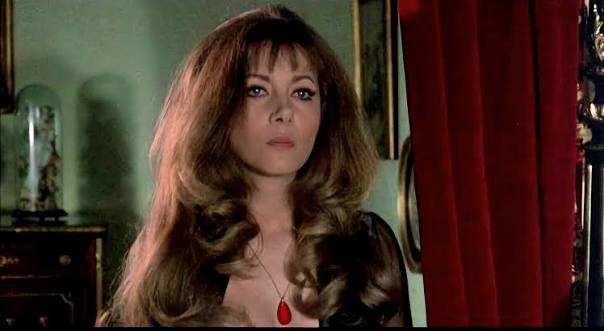
I wasn’t sure if I was going to cover the Karnstein trilogy. Mainly because as a series of movies, they’ve always struck me more as ‘Carry On Horror,’ and though that might not be 100% fair, these films, staring with The Vampire Lovers, are the moment Hammer realized flesh sold faster than fear.
They are, however, important in how the company survived. It was the end of the 1960s dream, the end of the traditional Gothic, and very nearly the end of Hammer Film Productions. The studio was bleeding money, and the old Gothic formula was losing its bite. Reinvention wasn’t optional—it was survival. They needed a transfusion. They needed a return to a deeper source—something older than Dracula.
They found it in the arms of Ingrid Pitt.
The Vampire Lovers is not just a sexier Hammer film. It is a fundamental restructuring of the vampire myth. It moves away from the Count in the Castle and moves toward the Parasite in the Parlor. It is a film about the permeability of the domestic space and the dangerous, seductive power of a past that refuses to stay buried. It is the first step into the Trilogy of Flesh, and it remains the only one that truly understands the tragic weight of its own immortality.
Le Fanu vs. The Hammer Machine
To understand The Vampire Lovers, one must understand Sheridan Le Fanu. Long before Bram Stoker codified the vampire as a predatory, male aristocrat in Dracula, Le Fanu gave the world Carmilla. Published in 1872, it was a story of loneliness, ancestral curses, and the blurred lines between female friendship and vampiric obsession. This was not a retreat into the past, but a restoration of something the Dracula sequels had thinned out: intimacy.
Stoker’s Dracula is a linear invasion; Le Fanu’s Carmilla is a circular infection. By retaining the novella’s central premise—female intimacy as predation—more faithfully than most adaptations, director Roy Ward Baker tapped into a vein that had been missing from the Dracula sequels. This is a story about the weight of the bloodline. The Karnsteins aren’t just monsters; they are an ancient family whose very existence is a violation of the natural order. Carmilla (Mircalla) is a tragic figure, a woman out of time, seeking the only thing a vampire can truly desire: a reflection of herself in the eyes of another. This isn’t horror from the outside—this is horror born from the very marrow of the European aristocracy.
And then there’s the fact that Hammer was looking for an excuse to show more skin because they were broke and the censors were finally napping. Carmilla was the perfect loophole. It’s Classy Exploitation. They took a high-brow literary story and used it to justify a movie that spent 50% of its runtime in a bathtub or a bedroom. But here’s the kicker—it actually worked. Because they stuck to the book, the sleaze feels like it has a purpose. It’s not just there for the sake of it; it’s there because the story is about the danger of desire. It’s the one time Hammer managed to be naughty without losing its dignity. They traded the dusty capes for silk nightgowns, and honestly, we should all be grateful.
Ingrid Pitt
The success or failure of this film rests entirely on the shoulders of Ingrid Pitt.
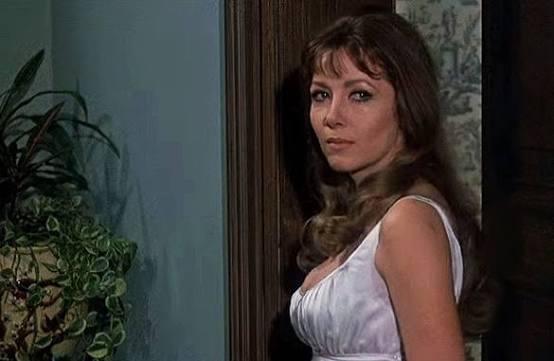
Pitt’s Mircalla feels less like a fantasy figure and more like a survivor out of time. Her experience of wartime imprisonment as a child lent the performance a gravity that can’t be faked; the hunger in her eyes feels lived-in rather than theatrical. She is someone who had seen the void and returned with secrets. Her Mircalla is a creature of immense loneliness. When she gazes at her victims—Laura (Pippa Steel) and Emma (Madeline Smith)—you see more than hunger. You see a desperate, metaphysical need to belong. She is the perfect predator personified: beautiful, consuming, and utterly indifferent to the moral structures of the men who try to stop her. She doesn’t haunt the screen; she commands it. She is the first one of, if not the only, Hammer vampires to feel ancient in a personal, interior way—not just mythic. And that’s because Ingrid Pitt was a goddamn superstar.
In a studio that usually treated women like Scream Queens who were there to look pretty and die, Pitt walked on set and took over the whole show. She has this don’t mess with me energy that makes every scene feel dangerous. When she bites someone, she’s not doing that polite Count Dracula nibble; she looks like she’s trying to reclaim her property. She’s physically dominant, she’s unapologetic, and she makes the male leads look like cardboard cutouts. She made the lesbian vampire trope into something more than a pin-up fantasy—she made it an act of war.
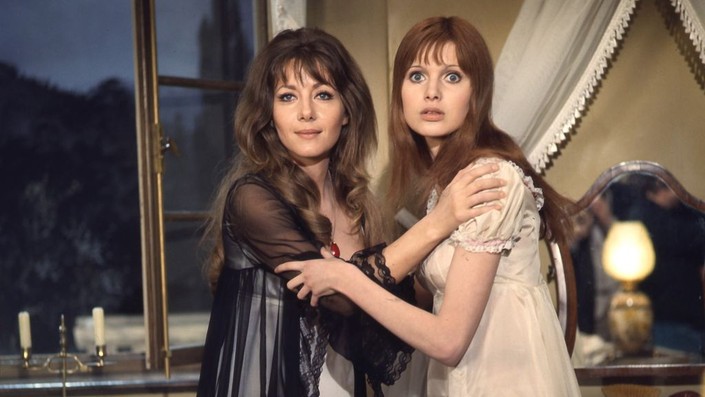
The Domestic Siege
The structure of The Vampire Lovers follows a pattern of infiltration and consumption that mirrors the decay of the Victorian family unit.
The horror of the Karnstein curse is that it doesn’t storm the gates; it is invited in. Mircalla is dumped at the doorsteps of the nobility under the guise of an orphaned guest. This is the ultimate subversion of the Victorian home. The sanctuary becomes a feeding ground. The families—the General (Peter Cushing), Roger Morton (George Cole), and their daughters—are destroyed from the inside out. This reflects a deep-seated anxiety about the “other” entering the private sphere. Mircalla doesn’t just drink their blood; she dissolves their social bonds. She turns daughters against fathers and friends against protectors. It is an act of social deconstruction, proving that the home is only as safe as the secrets it keeps.
It’s the ultimate bad houseguest movie. You let this beautiful girl stay over because her mother has an emergency, and three weeks later, your daughter is anemic and your doctor is baffled. It’s a slow-burn disaster. The fathers are slow to recognize the threat—bound by manners and disbelief. They’re so busy being proper and gentlemanly that they don’t realize the monster is literally sleeping in the guest room. It’s a satire of the middle class: they’re so obsessed with manners that they’ll let a vampire kill their kids as long as she says please and thank you. The horror here is how easy it is to trick a bunch of polite English people into letting a killer stay for breakfast.
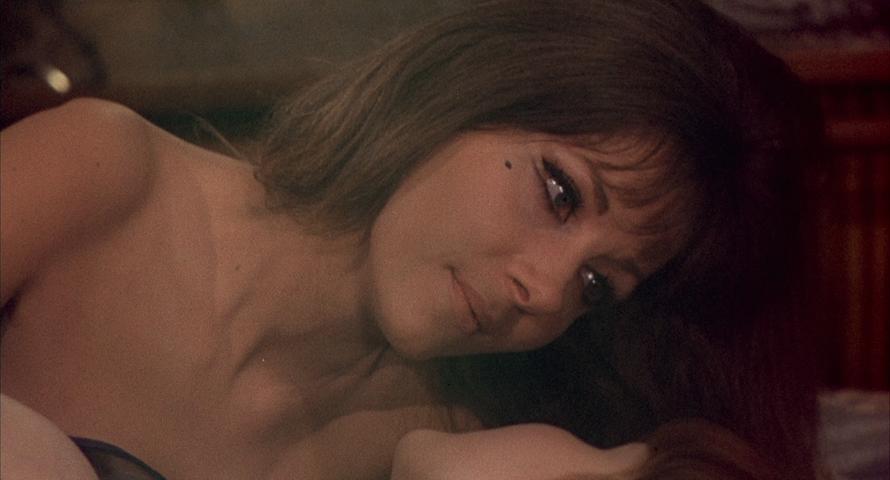
Sex as a Weapon
We have to address the erotic elephant in the room. The Vampire Lovers pushed the boundaries of what was acceptable in 1970.
And then some.
The sexuality in this film is not merely for the viewer’s voyeuristic gaze; it is the mechanism of the curse. Mircalla’s seduction is a form of psychic bonding. By engaging her victims in the intimate space of the bedroom, she bypasses their defenses. The physical act of the bite is indistinguishable from an act of love. This is the Alchemy of the Flesh—the point where pain and pleasure become a single, transformative experience. Mircalla is offering her victims a release from the rigid, stifling morality of their lives. She is a liberator as much as she is a killer. The bedroom is the only place where their true souls can burn bright, away from the judgmental eyes of the Church and the State.
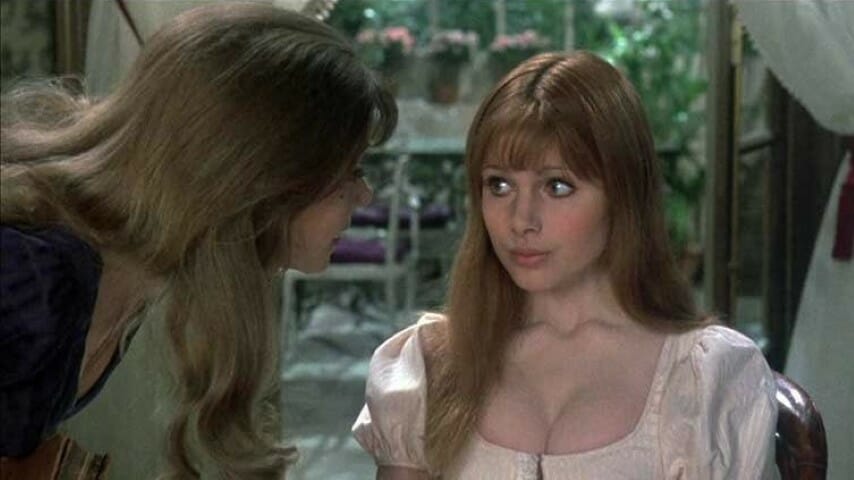
However, let’s not over-intellectualize the bathtub scene. Hammer knew exactly what they were doing. They were selling tickets. But compared to the garbage sex-comedies that were starting to swamp the UK box office, this is high art. There’s a tension in the air that you just don’t get in modern horror. It’s all about the longing. Madeline Smith and Ingrid Pitt have more chemistry in a single shared look than Christopher Lee had with any of his brides in a decade. It’s Gothic Sleaze, sure, but it’s done with such style and such commitment to the vibe that it feels essential. It’s the one movie that actually lets the vampires have a good time before the guys with the stakes show up.
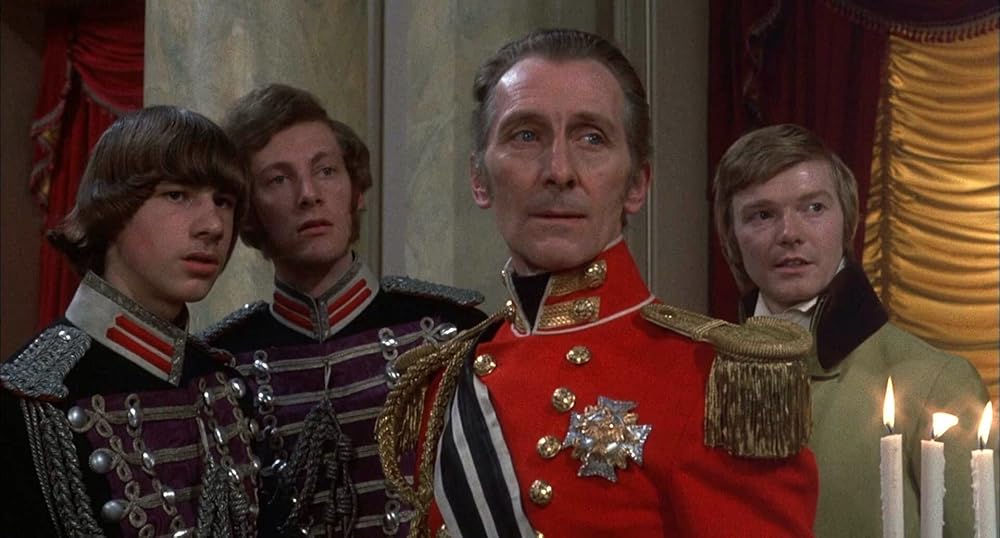
Cushing and the Failure of Authority
Peter Cushing appears in the film as General von Spielsdorf, but he is not the hero we are used to.
Here Cushing represents the rigid authority of the past—an authority that is slowly losing its grip on the world. His character is a man of action, but his victory is a hollow one. He can chop off a head, but he cannot cure the rot that allowed Mircalla to enter his home in the first place. He is the wise man who has stopped learning. His grief for his daughter is palpable, but his solution is purely mechanical—the stake and the sword. He is the guardian of a world that Mircalla has already proven is obsolete. His presence in the film is a bridge between the classic Hammer era and this new, grittier reality. Cushing carries the legacy of Van Helsing into a film that increasingly centers the monster.
Cushing is the designated fun-killer. He shows up in the beginning, loses his daughter, and then disappears for an hour while the movie actually gets interesting. When he finally comes back with a big axe, it feels like the old guard trying to shut down a party they weren’t invited to. He’s great—because he’s Peter Cushing and he could read a phone book and make it spooky—but you can tell the movie’s heart isn’t with him. It’s with the vampires.
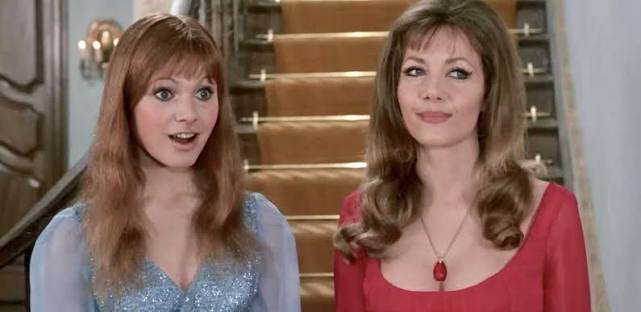
The Languid Lens
Directed by Roy Ward Baker, the film has a unique visual texture that separates it from the flat, television-style look of later Hammer entries.
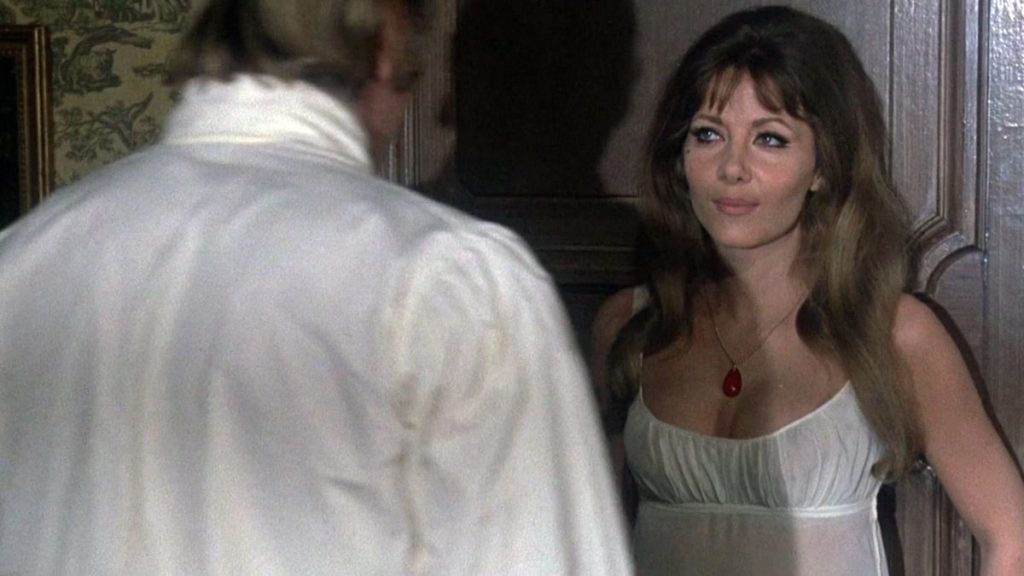
The visual language of The Vampire Lovers is one of sensual decay. The camera lingers on the lace, the skin, the blood on white sheets. The colors are saturated—deep reds, funereal blacks, and the pale, sickly white of the vampire’s flesh. This is the eroticism of the grave. Baker uses a languid, dreamlike pace that forces the viewer into a state of hypnotic induction. We aren’t just watching a story; we are being seduced by the frame. The ruins of the Karnstein castle are not just a set; they are a psychological landscape—the return to the primal mother of the crypt. It is a brilliant use of cinema, where the image itself becomes a vehicle for the transgressive.
It looks like a million bucks, even though it was probably shot on a budget of three pounds and a crate of sherry. The sets are lush, the costumes are gorgeous, and the lighting is top-tier. It has a European art-horror sheen—color-saturated, sensual, almost operatic. And that final act in the tomb? It’s the most classic Hammer moment in the movie, but it feels earned. When the General swings that sword and the head rolls, the blood may still be theatrical red, but here it feels right. It’s the climax we needed after ninety minutes of slow-burn tension.
The Harry Robinson Requiem
We cannot discuss this film without the haunting score by Harry Robinson.
Robinson’s music is the baroque heart of the film. It doesn’t rely on cheap jump-scare stings; it builds a wall of melancholic sound that emphasizes the tragedy of the Karnstein existence. The strings are weeping, the melodies are circular—echoing the ancient ache of the vampire’s soul. The music creates a space where the supernatural feels inevitable. It is the sound of the evil breathing in the dark. It tells us that while the bodies might die, the curse is eternal.
The music is fantastic. It’s got that European Arthouse vibe that makes you feel like you’re watching something important instead of just a movie about girls in nightgowns. It’s dramatic, it’s loud when it needs to be, and it keeps the energy up during the long, talky scenes in the drawing rooms. It’s one of Robinson’s strongest scores for Hammer.
The Karnstein Lineage
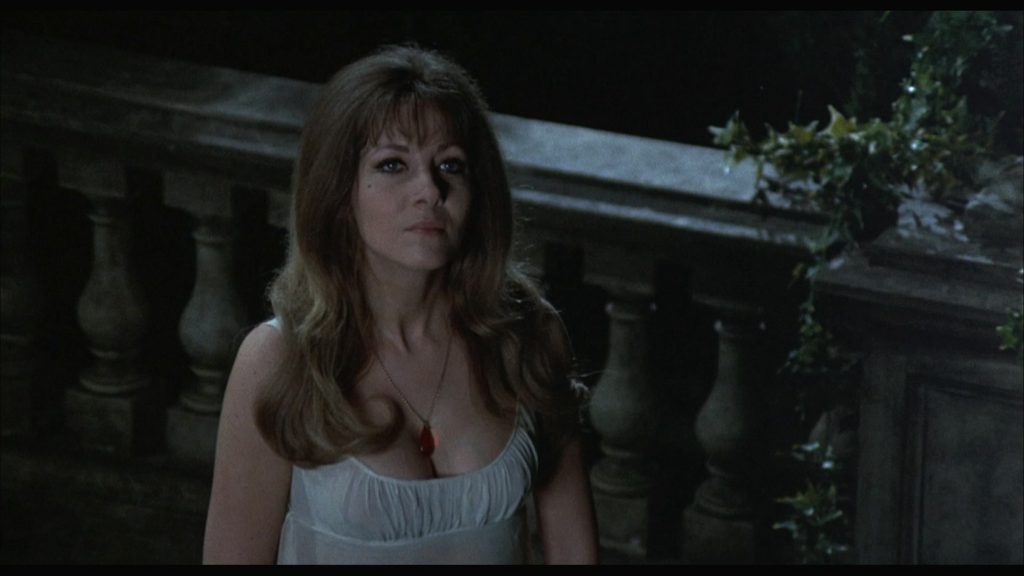
The history of tragedy in the Karnstein Trilogy is the history of the Bloodline. The Karnsteins are a cursed race, a family whose very biology is a rebellion against God. The payoff here here is the ancestral memory. Mircalla is a ghost who has learned how to wear flesh. She is the manifestation of the sins of her ancestors, returning to feed on the descendants of those who wronged them. It is a cyclical tragedy—the past devouring the future. To kill a Karnstein is to attempt to stop time itself. But as we see in the sequels, time cannot be stopped; it can only be diverted.
Having said that, the curse is basically just an excuse for a bunch of beautiful vampires to hang out in a basement and wait for someone to wake them up. But it works! It gives the movie a sense of history that Scars of Dracula completely lacked. You feel like this conflict has been going on for centuries. It’s not just a monster of the week; it’s an epic family feud where the casualties are all teenage girls. It’s dark, it’s messy, and it’s way more interesting than watching Dracula try to find a new house in London for the tenth time.
Final Thoughts
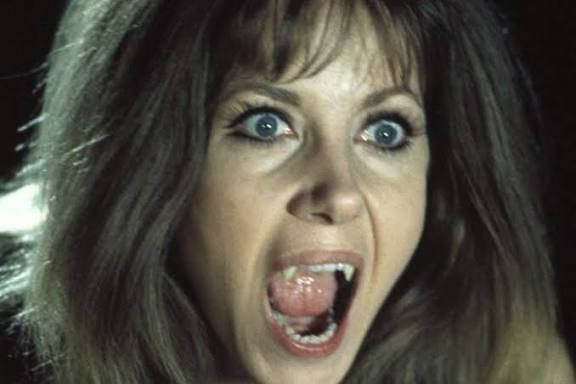
The Vampire Lovers is the ultimate expression of the erotic Gothic. It is the moment where Hammer proved it could still be dangerous, still be relevant. The vampire doesn’t just want your blood; she wants your soul, your identity, and your bedroom. She is the ultimate internal enemy.
The fathers (Cushing, Cole) are useless. They are the guardians of a moral code that can’t even recognize the threat until it’s too late. Their power is a lie. Their failure absolute.
The Vampire Lovers embraces the idea that the darkness is seductive, and we are all willing to be seduced. We don’t want Mircalla to leave; we want to follow her into the tomb. It is a reminder that the most dangerous forces are the ones we invite in because they look like what we want. The Karnsteins aren’t an army; they are an idea, and you can’t kill an idea with a stake—you can only bury it for a while.
It is a masterpiece of cursed cinema. It is arguably the high-water mark of Hammer’s early-70s reinvention. It is the only reason we are even bothering to talk about the sequels. It is the raw, terrifying reality of desire, and it still draws blood fifty years later.
Leave a Reply to Lust for a Vampire (1971): When Gothic Horror Tried to Go Pop Cancel reply