Horror fans have had it pretty good recently. Studio releases like Weapons, Bring Her Back, and Companion have torn it up at the box office this year, while films like The Substance, Parasite, and Get Out have transformed how horror is perceived at the Oscars. We’re living in a horror movie haven era of big ideas and even bigger subtext. Still, the internet is a place full of conflict where some fans will never be satisfied. People clamor for the days of “mindless horror,” where not everything was a metaphor, and a good old-fashioned slasher movie was seasoned with misogyny, nudity, and brutality. Films with Jason, Freddy, and Pinhead, that told simple stories pitting good guys against evil, and no discernible traces of politically charged “woke” values. If you are someone who thinks like this, the best slasher film of the year, The Red Mask, is not for you.

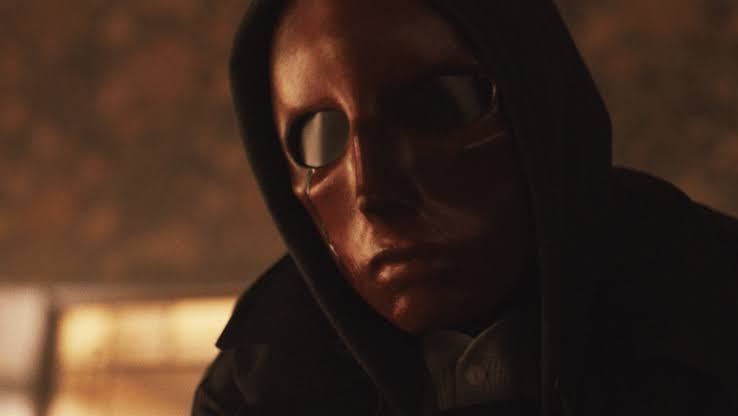
For the rest of us, particularly lovers of Scream screenwriter Kevin Williamson’s way of thinking, The Red Mask will ultimately be one of the best indie horror films you will see all year.
Hopefully, I’ve riled you up enough to continue reading. I know I have some explaining to do. But for one moment, let’s talk about what it means to be a horror fan. Fans have dealt with a lot of shit. The Cunningham vs. Miller squabble has kept Jason out of our lives for sixteen years, with last month’s Sweet Revenge providing sanguine relief for those tormented that we’ve had five more Jigsaw appearances, four new Ghostfaces, four times Michael has come home, three lackluster Leatherfaces, three different Pinheads, and one underwhelming Nightmare on Elm Street. The franchises that define Millennials and Gen Xers as horror fans have very few wins among them, and it’s challenging to see some of these films struggle to please audiences. That’s where The Red Mask comes in.
As we continue to suffer through these incredibly preposterous times, where the internet is choosing sides between Zack Snyder and James Gunn’s Superman movies (go team Gunn), the pressure is on creatives at large institutions, like Warner Bros., to bring the broadest crowd possible into the theater. That’s the gravity of the situation Allina (I Saw the TV Glow’s Helena Howard) finds herself in, as she pens the latest entry in The Red Mask franchise. After being named the film’s screenwriter, the internet is outraged that the studio would pick a Queer, Black Woman to write the franchise’s next installment. Her feed is full of angry fans sending deathtweets and posting vile statuses. Allina and her fiancé, Deetz (Séance’s Inanna Sarkis), retreat to a remote cabin in the woods to help Allina finish the film, roleplaying as Allina’s characters so she can determine what works and what doesn’t, in order to appease the film’s fans.
A couple comes knocking at the cabin door late one evening, saying they’ve booked the cabin Allina and Deetz are staying in. A simple mix-up? Allina has her doubts, while Deetz assumes horror rewrites have made her paranoid. The couple seems innocent enough at first, but once the conversation shifts to horror films, The Red Mask eventually overtakes all conversation. As remote woodsy bungalow vacationers, Ryan (Malignant’s Jake Abel) and Claire (V/H/S/85’s Kelli Garner) instantly turn menacing as they’re invited to join The Red Mask roleplay, providing them the opportunity to have a say in who gets cut from the next film.
Writer Samantha Gurash teams with Bastard writer Patrick Robert Young to present the most meta horror experience since Scream. The Red Mask is lovingly referential, relying on horror fans’ love and knowledge of slasher films and plays with ideas and imagery from some of the greats. However, as writers, I’m sure they also understand the pressures creating new stories for a beloved character also entails, and the toxicity that fandoms can carry. Whether it’s a Marvel IP, Star Wars, Halloween, or Friday the 13th, difficulty arises in trying to rattle and surprise viewers who may voice skepticism about a new story, based on who is writing that story, before they’ve even watched it.
What Gupta’s film does exceptionally well is consider the divide and anonymity of the internet – how bold we can be when our comments are insulated. As Ryan, Claire, and Allina have conversations surrounding Michael Haneke’s Funny Games and The Red Mask, things are calm and considerably measured in a face-to-face environment. The tension ticks up as Allina attempts to subvert the expectations of her audience, before those talks break down, and these fans are willing to kill to protect their beloved IP.
In the old slasher movies, trailers used to ask us to repeat to ourselves, “It’s only a movie,” but now, more than ever, it seems incredible that we have to remind folks of that fact. Rian Johnson, writer of Knives Out and Looper, received death threats after The Last Jedi was released, a fact that was translated into Radio Silence’s Scream V via the film’s Stab series. Meanwhile, Happy Death Day and Drop director Christopher Landon received death threats during the pre-production controversies surrounding Scream VII and the departure of actress Melissa Barrera after showing support for Palestine. Where art imitates life, life eventually imitates art, leading the Funny Games reference to become a much larger inspiration for The Red Mask than some audiences may understand.
Haenke’s Funny Games is about violence and desensitization. While brutal, all of the violence happens off-camera as a way of impugning the audience’s predilection for bloodlust. Did they come to see people survive a home invasion thriller, or did they come to see people die in a home invasion thriller? Did Ryan and Claire really come to the woods to talk with The Red Mask screenwriter, or were they always out for blood? Regardless, the Funny Games take is exceptionally provocative in a movie that pits elevated horror against its low-brow origins. While both sides maintain the film is a masterpiece, it becomes apparent that the reasons each thinks that way are oppositional in nature – Allina understands the subtext, while the surface-level violence entertains Claire.
While Funny Games may entertain both sides of the elevated horror argument, art, in all of its forms, changes depending on the eye of the beholder. Though many view repetitive old slasher sequels with fondness, the reviews for films like Jason Takes Manhattan or Freddy’s Dead: The Final Nightmare have never been viewed as particularly good, even if they have some entertaining qualities. Still, whenever someone new comes in to remake the films, we get cagey. Meanwhile, Batman characters continue to be explored through multiple interpretations, with many enjoying the various iterations. While Clooney’s nipple clad Batman was a bit of a bust in 1997’s Batman and Robin, the actor earned a bit of reprieve recently, after appearing in 2023’s The Flash, and while many will still consider it the worst Batman film, there is now nostalgia in place for just how cringey it is.
It’s funny how ire can eventually become fondness, isn’t it?
All of this is included in Ritesh Gupta’s The Red Mask, who uses the back and forth to create a heady experience about the movies we love and how our high expectations have caused grievous traumatization to those attempting to entice the fanbase. Whether it’s through subversive tactics for a fresher experience or accommodating fan input, casts and crews feel the brunt of whatever flaws occur within the films they’re making, and having greater access to fans’ reactions has only made the scene more volatile.

The Red Mask is a stroke of genius for the meta slasher subgenre. There’s as much of a love letter to Wes Craven’s New Nightmare as there is for the series, while containing a similar atmosphere of indie storytelling that pervaded Josh Reuben’s Scare Me. True horror fans will enjoy the argument here and understand the sentiments buried within, but horror has always been “woke.” Hellraiser is a Queer allegory for taboo sexuality. Candyman is about modern segregation and racism. A Nightmare on Elm Street is about the sins of the past and the doomed nature of children to repeat their reserved parents’ mistakes. And Jason is an allegory for fear, guilt, sin, and consequence, permeating culture to the point we stop living our lives. If viewers choose not to see these elements in older films, it isn’t because they don’t exist; it’s because their beholding eye rallies behind the violence.
Leave a Reply